Experiential · Spatial · Graphic
Oddli at USC
Spring 2026
Overview
Concept to Execution
Oddli is a sustainable LA-based fashion brand whose objective was to slowly transition from a playful build-in-public identity into an elevated lifestyle fashion brand.
Find the brand here.
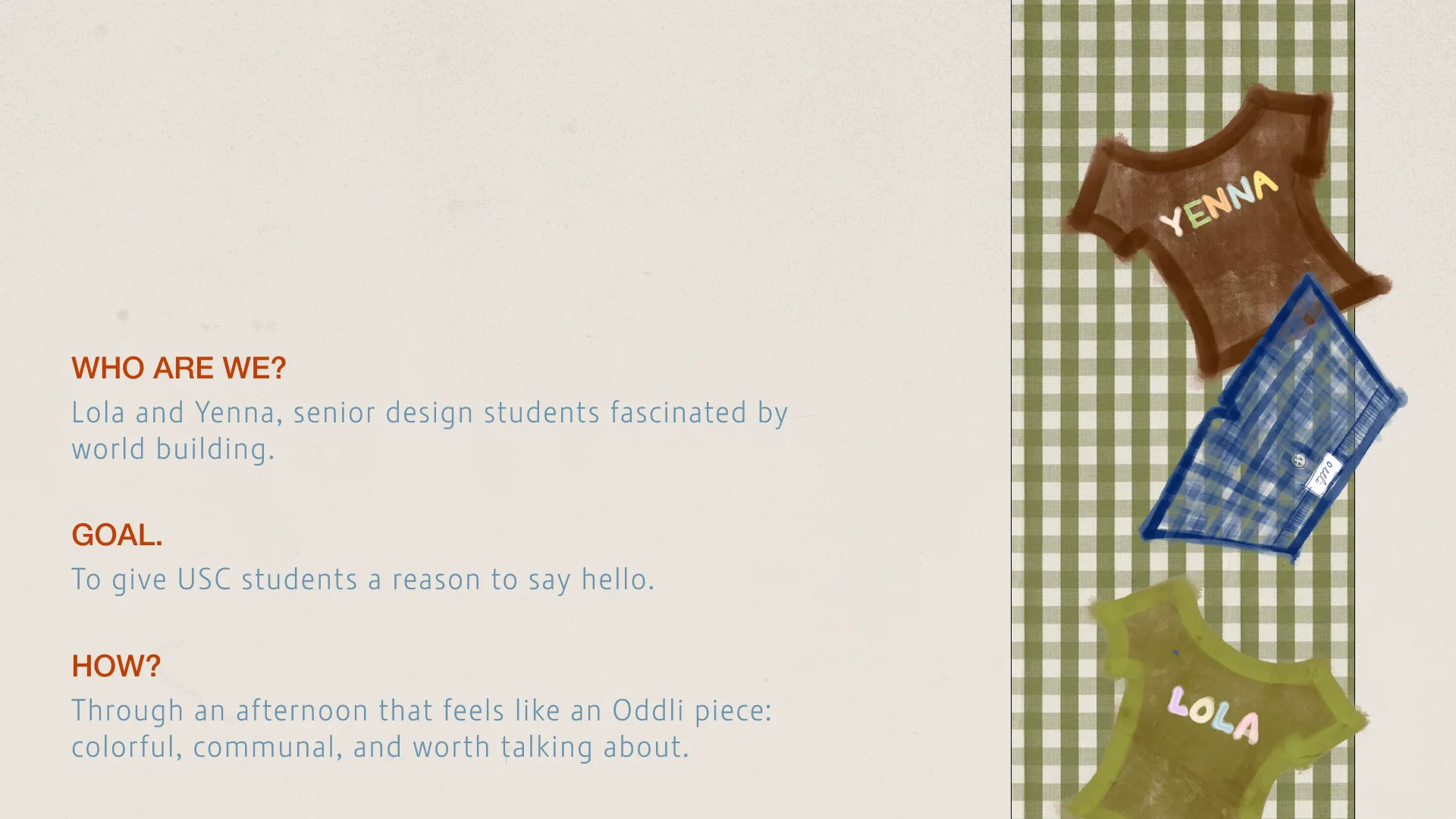
I partnered with designer Lola Hugas to craft the idea of an experiential campaign tailored to support this transition. We pitched it to Oddli, they approved, and then we led it end-to-end. Through numerous iterations, spatial design, production, and on-site execution, we produced their first campus activation at USC.
Process
Oddli Timeline
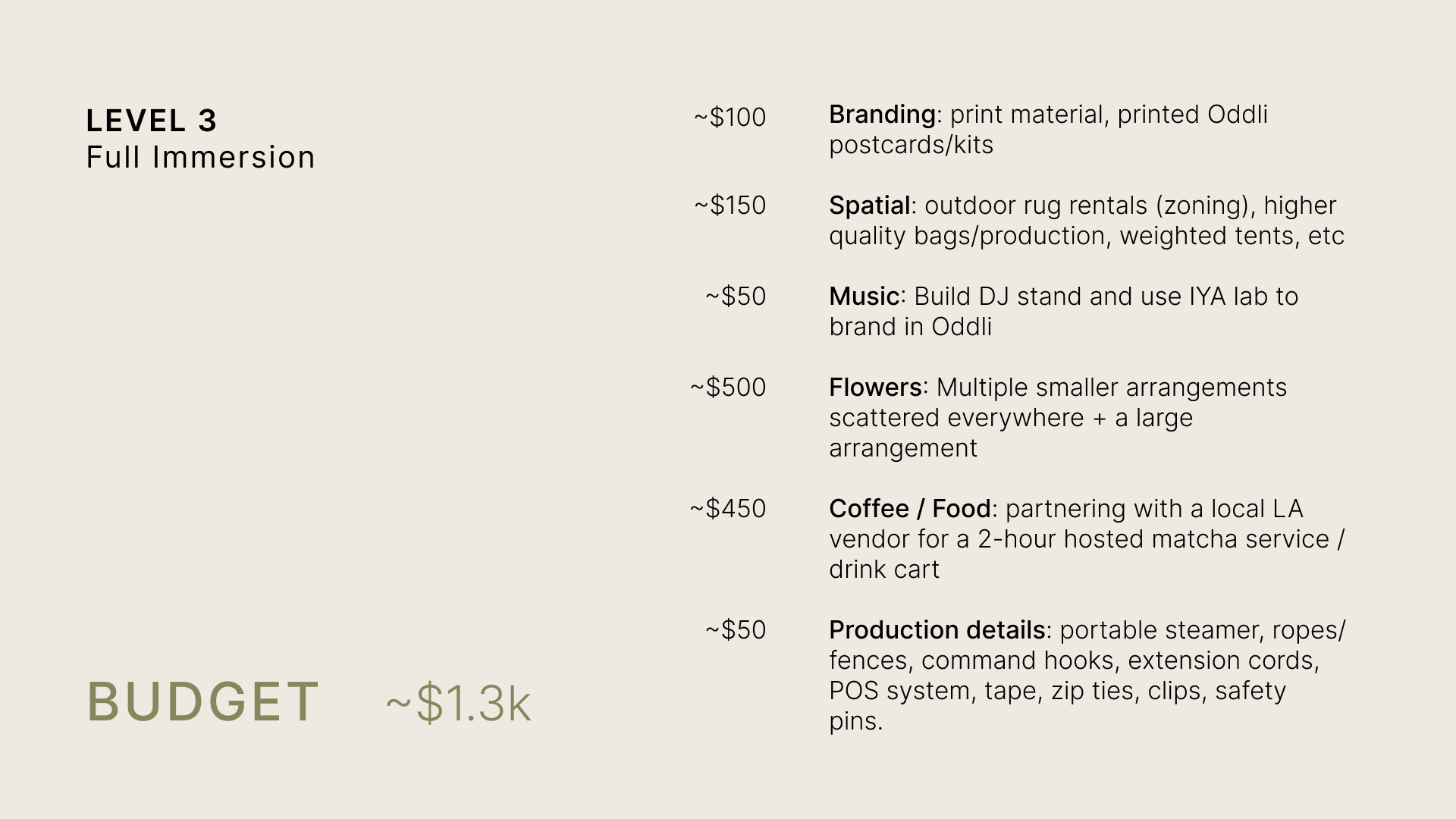
Pitched the concept to Oddli and secured the project. Feedback: the scale exceeded their budget.
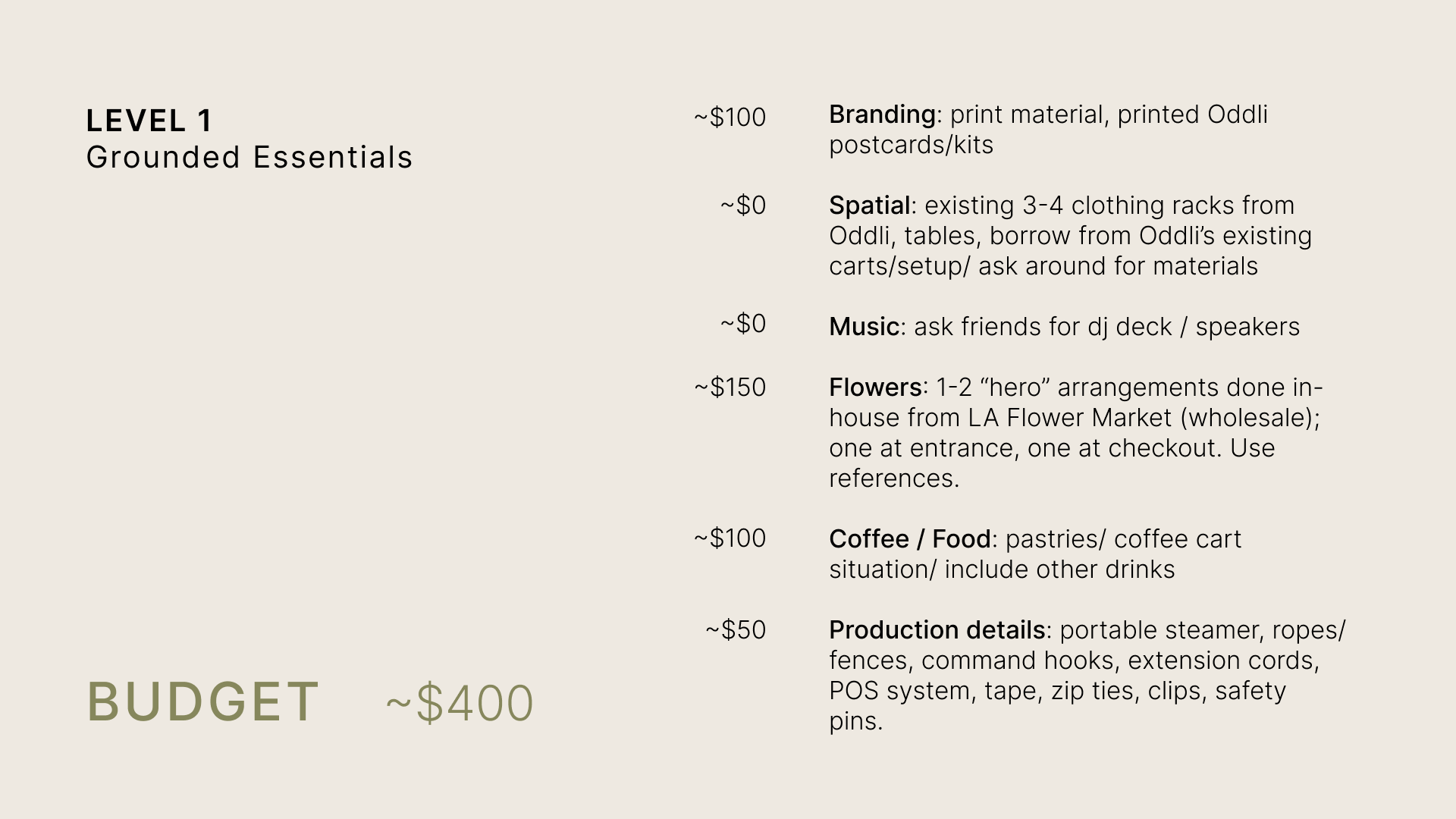
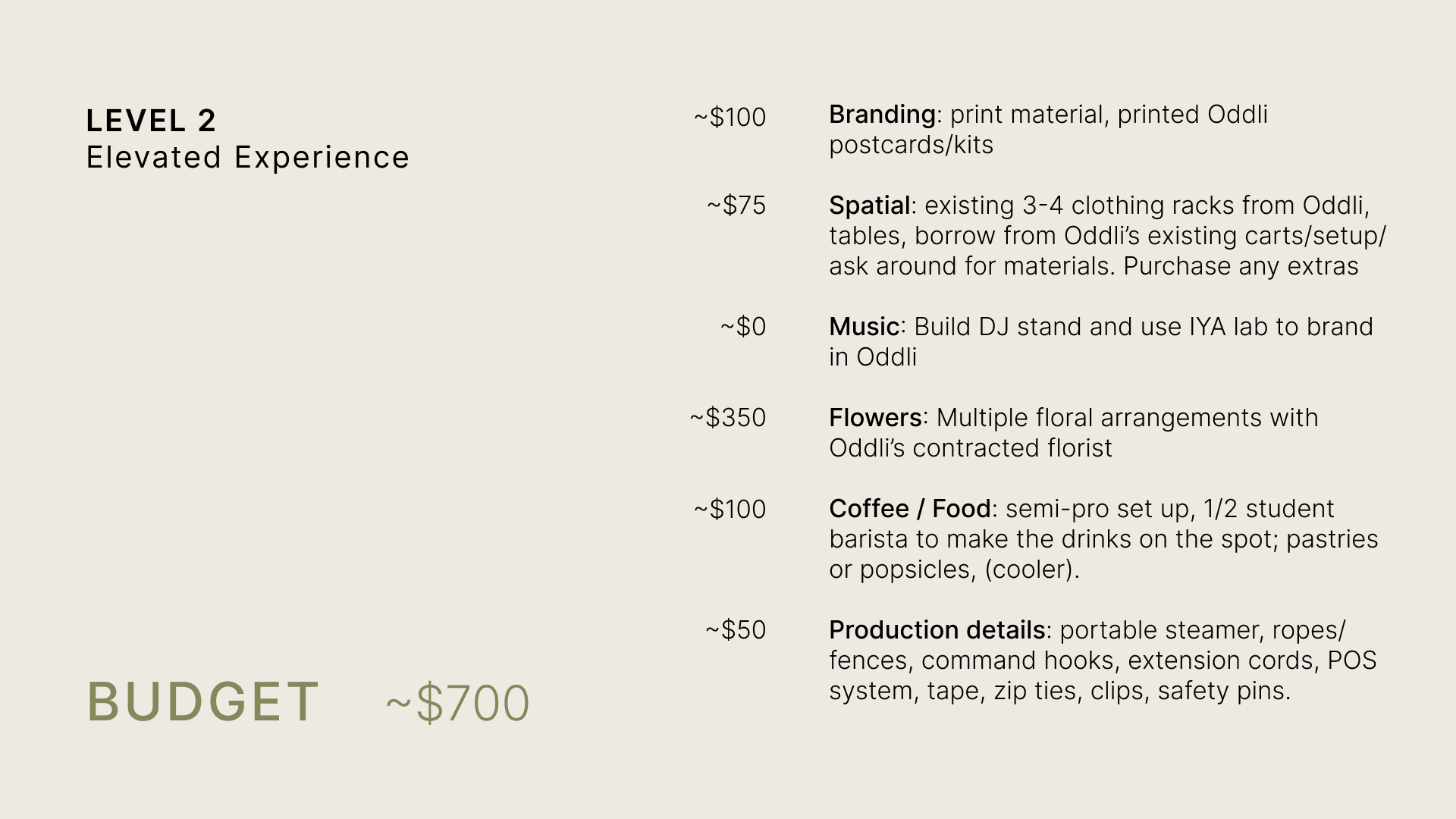
Reworked scope into a 3-tier price and production plan.
Finalized the Theta partnership.
Presented the revised direction and costs to Oddli, and locked in the plan.
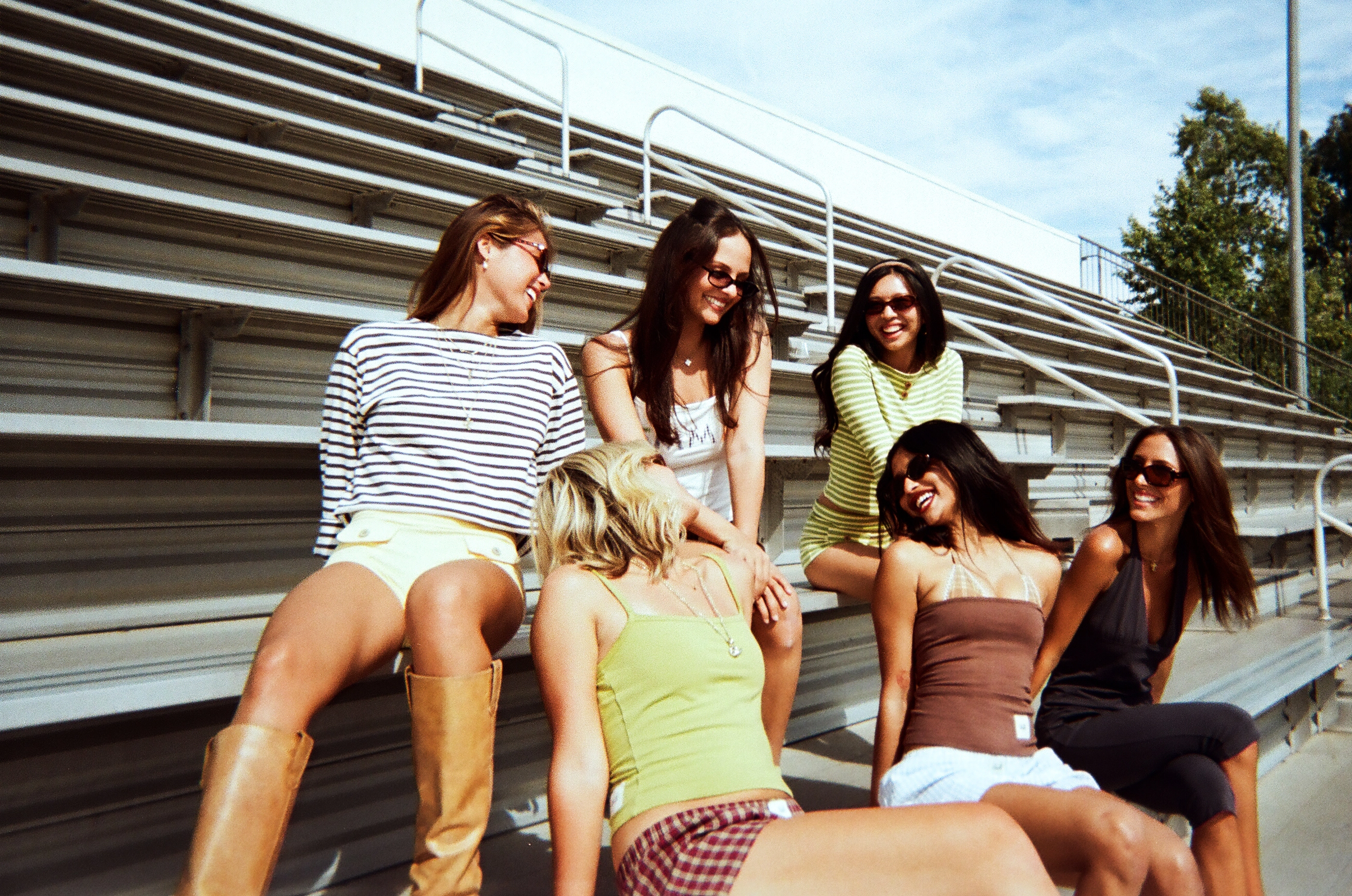
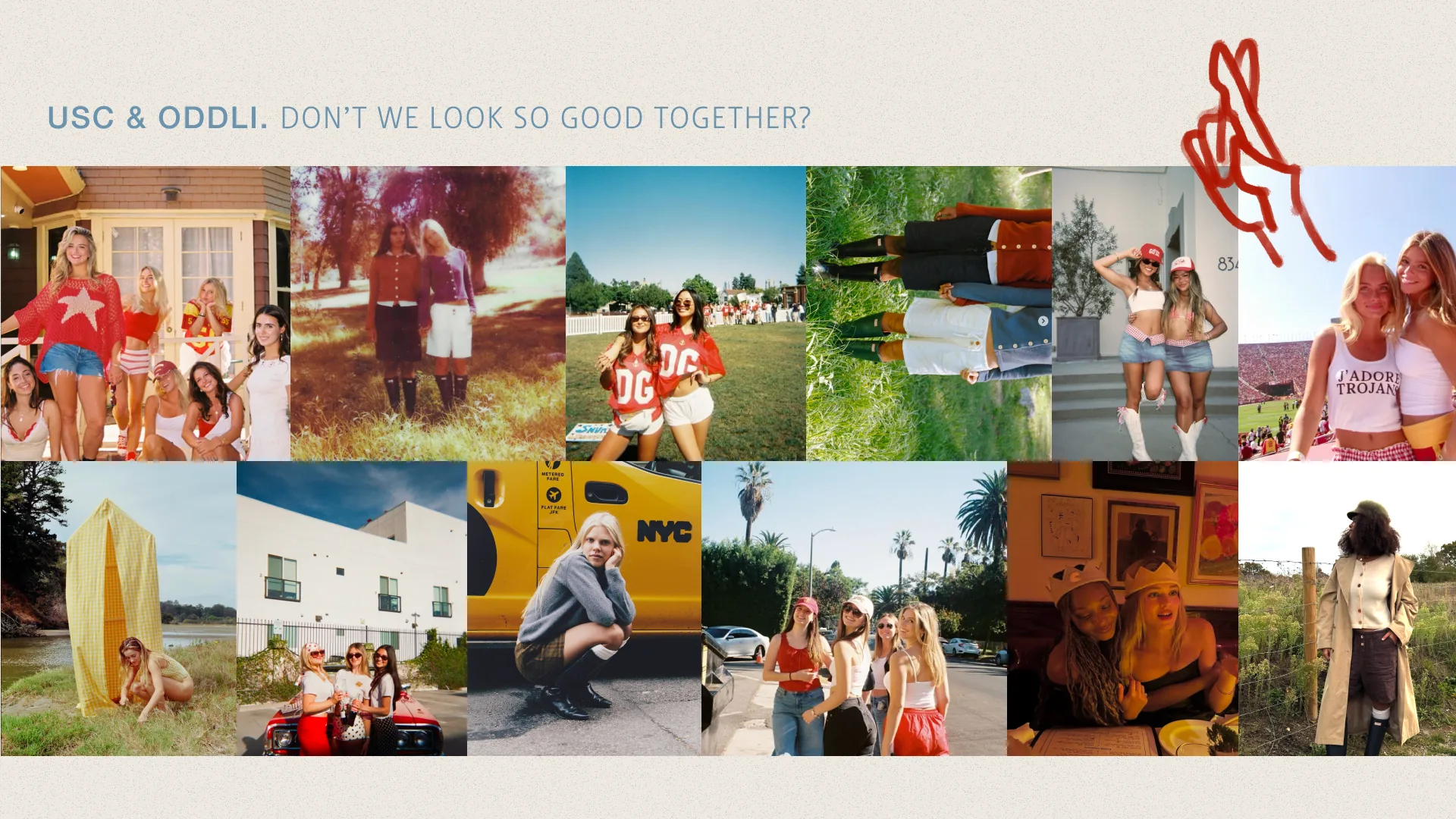
Updated Oddli on Theta partnership, new direction iterations, photoshoot casting—presented USC students we hand-picked to represent the brand and who span tech, business, sorority, and arts circles.
Met with Oddli to align on photoshoot creative direction, styling, inventory schedule, event outline.
Picked up inventory at Oddli HQ, selecting pieces that would sell the sample-sale story.
Shot the photoshoot.
Presented the initial floor plan to our Constructing Experiences professor, then revised it for flow and guest experience.
Met with Oddli to align on event space flow and event graphics.
Met with a florist to set a visual direction, then negotiated the final arrangement and cost.
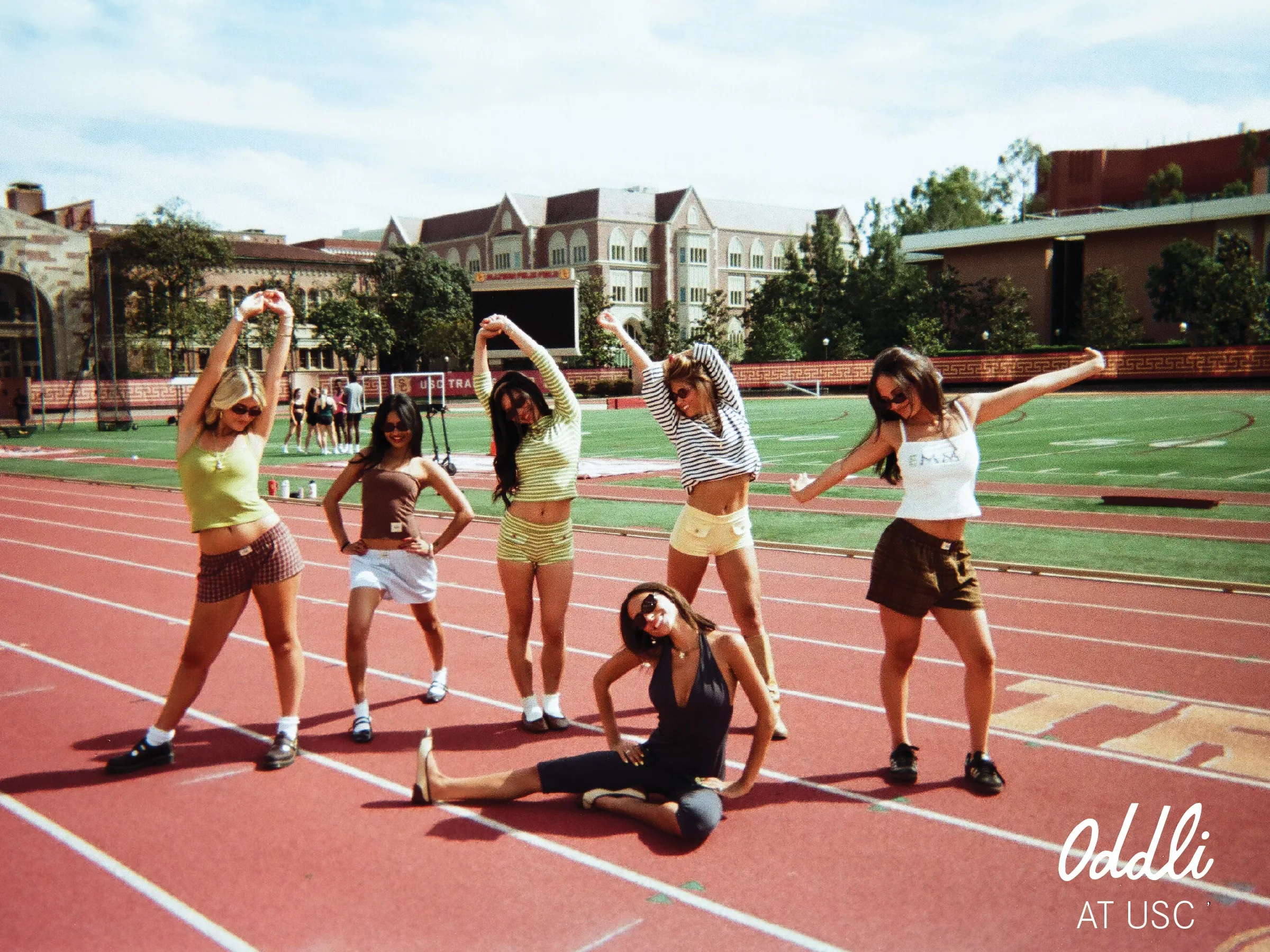
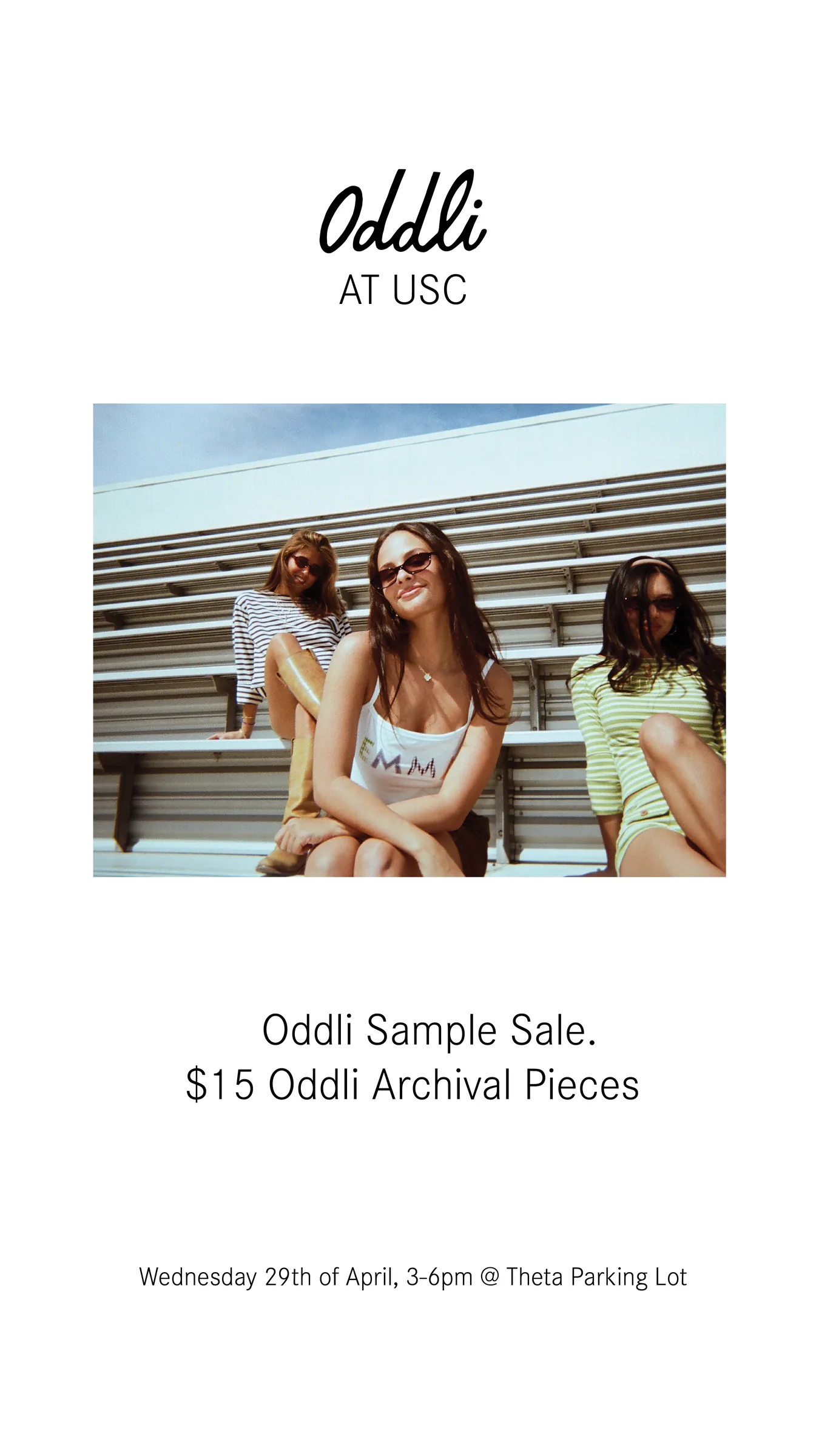
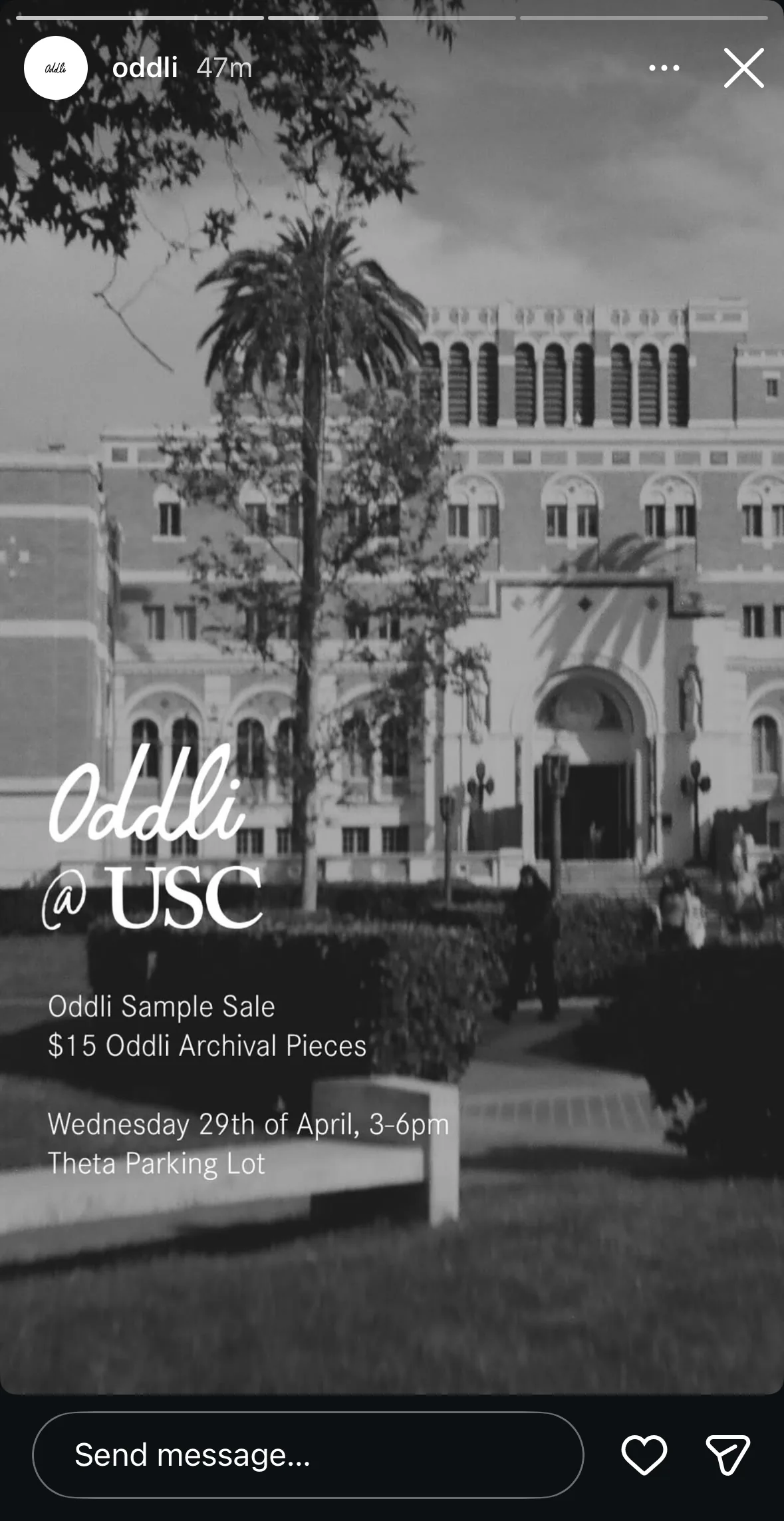
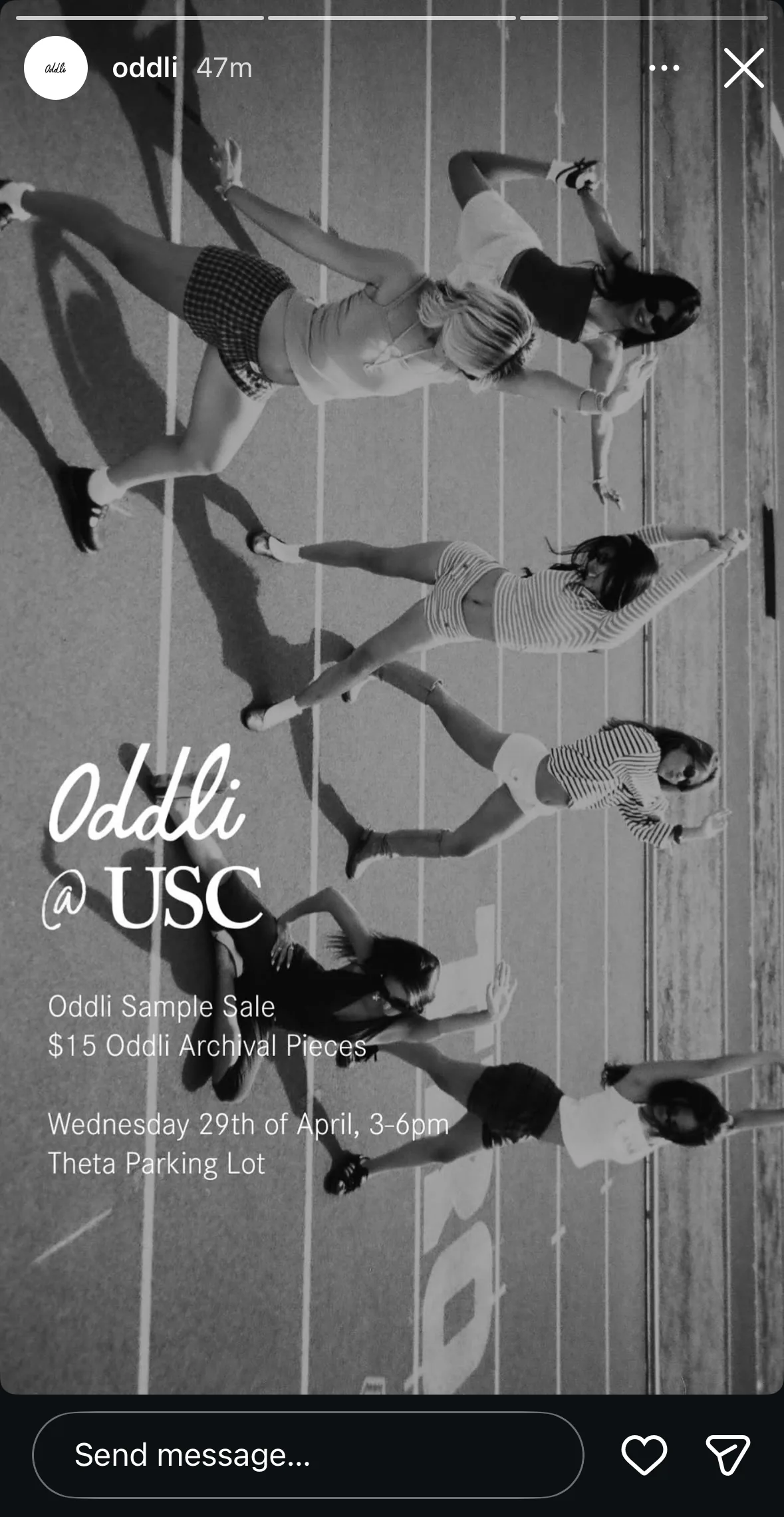
Released promotional assets from the photoshoot to student organizations, professors, and online forums.
Picked up final round of supplies.
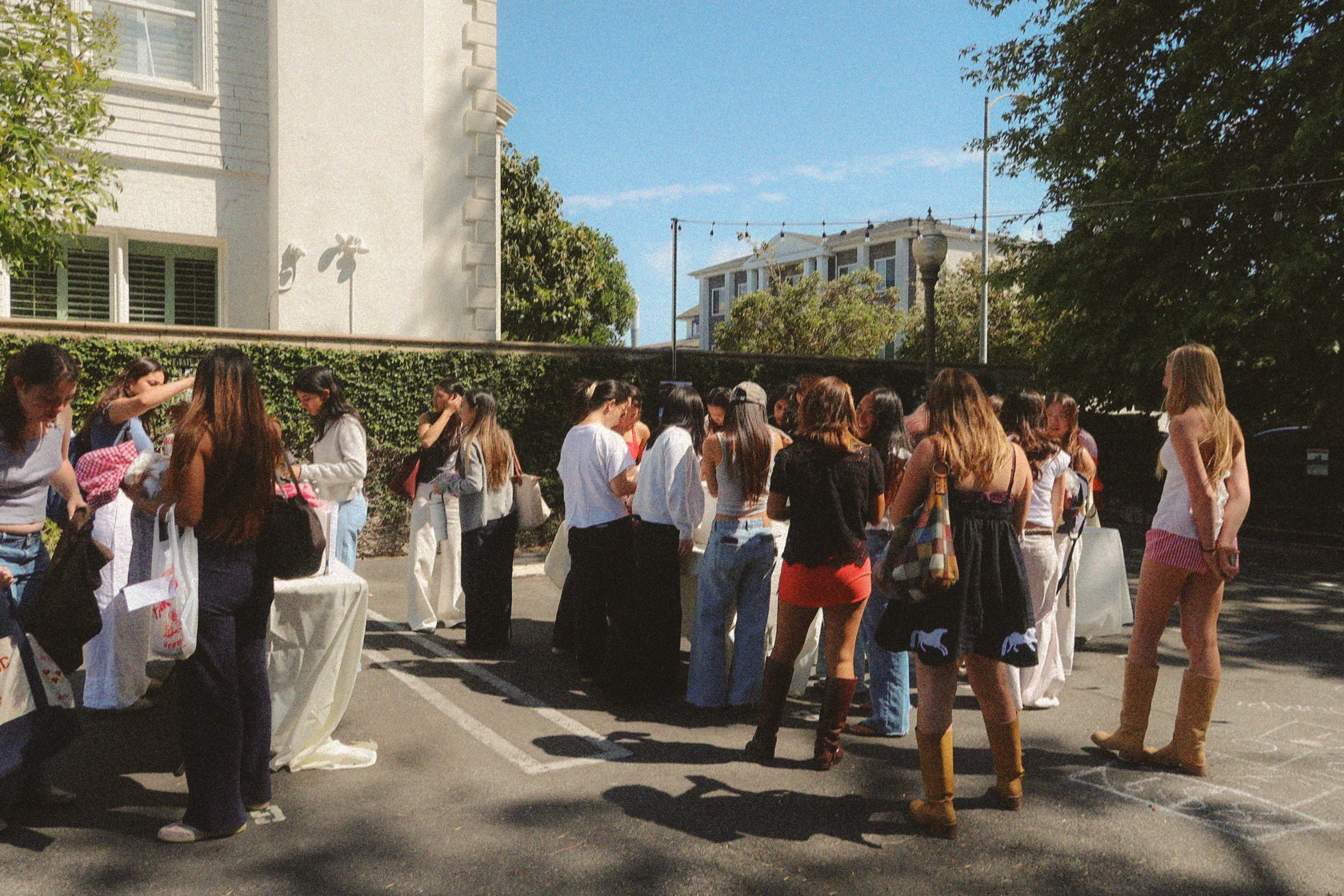
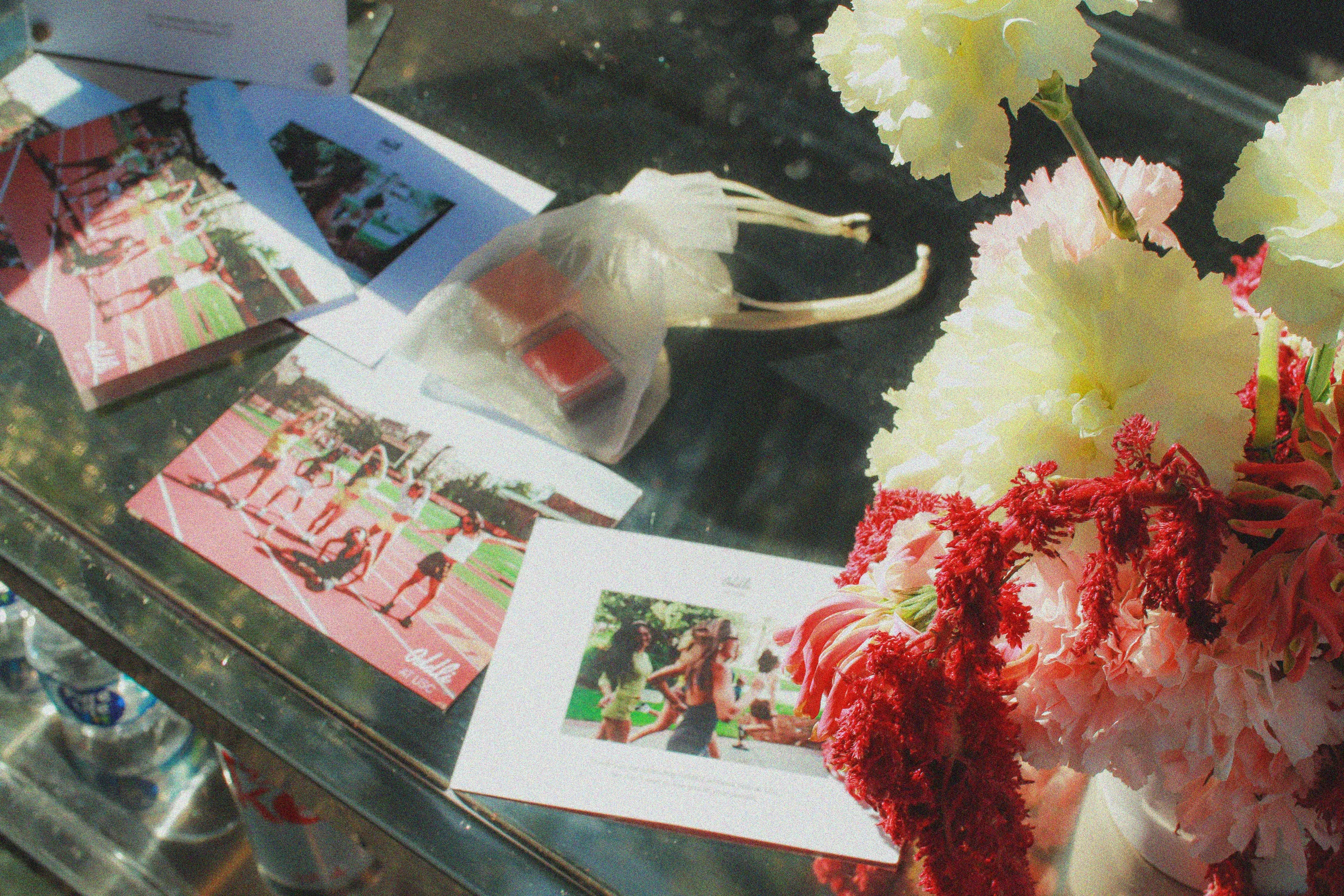
Ran the pop-up event.
While Oddli approved and advised at each stage, we were responsible for making the event happen, from end-to-end. That meant coordinating models, Theta volunteers, Oddli’s team, Theta leadership, and a florist, while also executing experience and spatial design, marketing, on-site production, communications, event and team coordination between 15+ contributors, and managing invoicing and financials— much of it for the first time.
Concept
The Idea That Held
The idea never changed: bring Oddli onto campus. The “how” did. Across scope, scale, budget, and format, the concept shifted with each Oddli meeting, before landing on what actually got built.
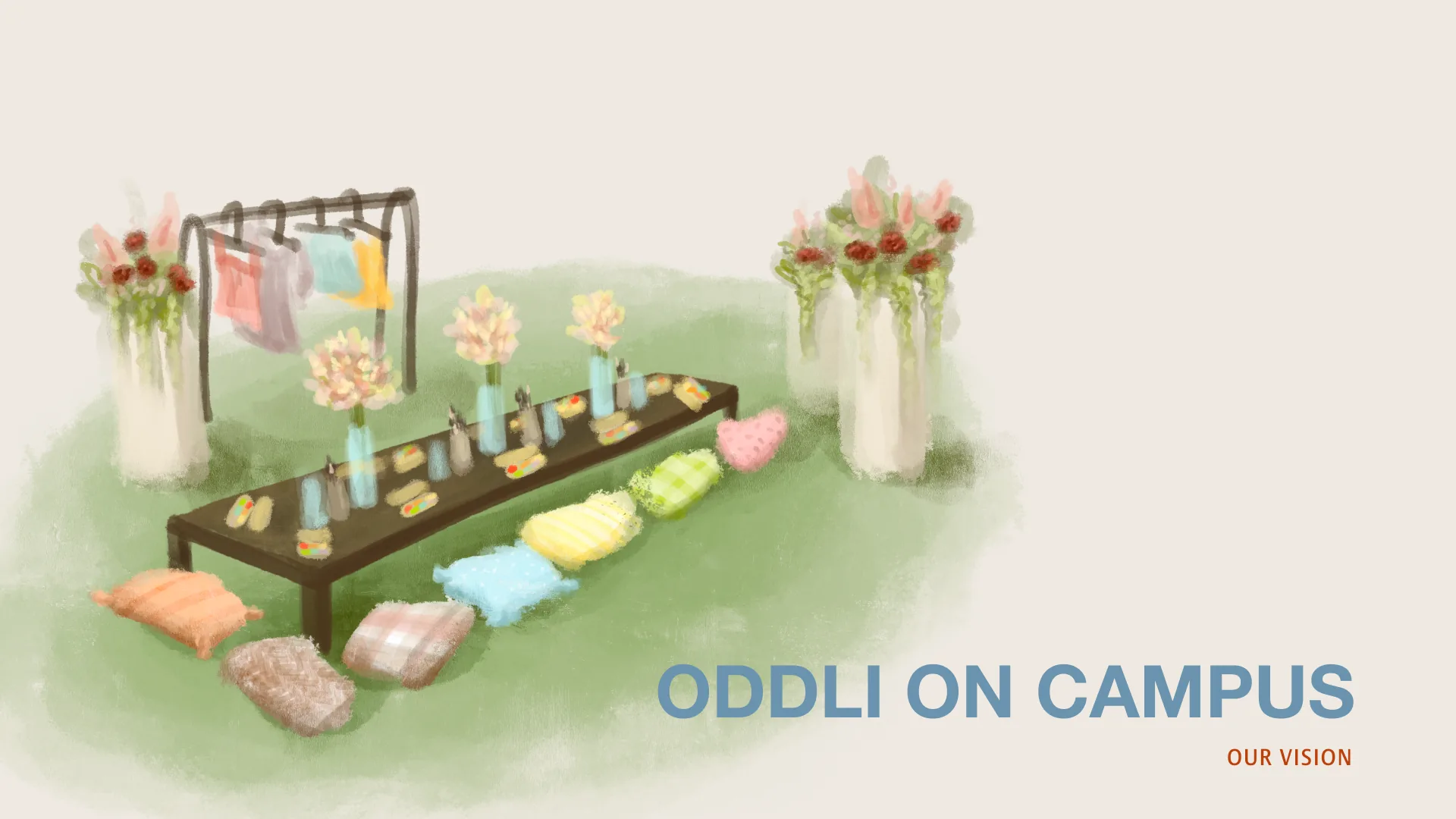
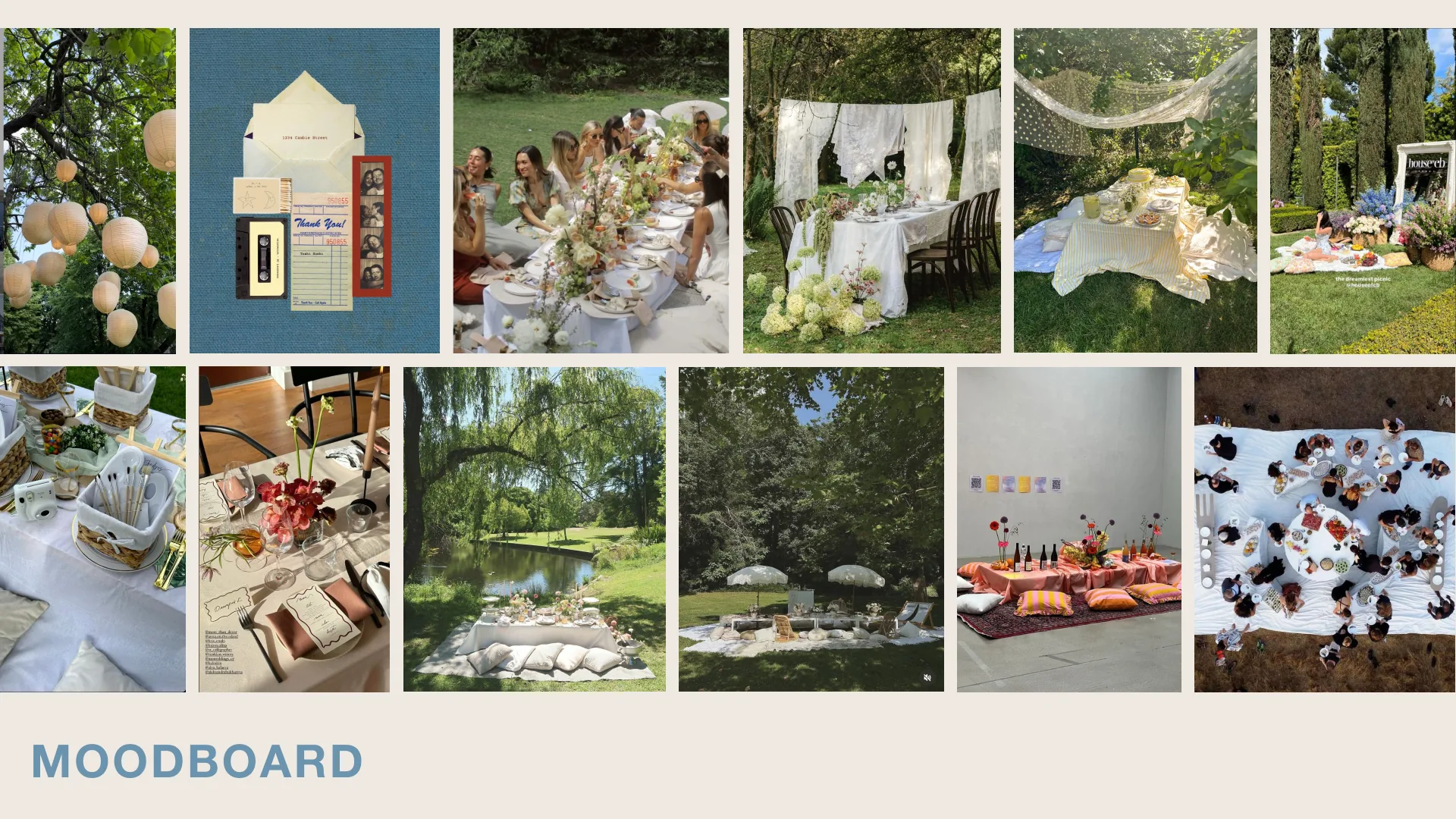
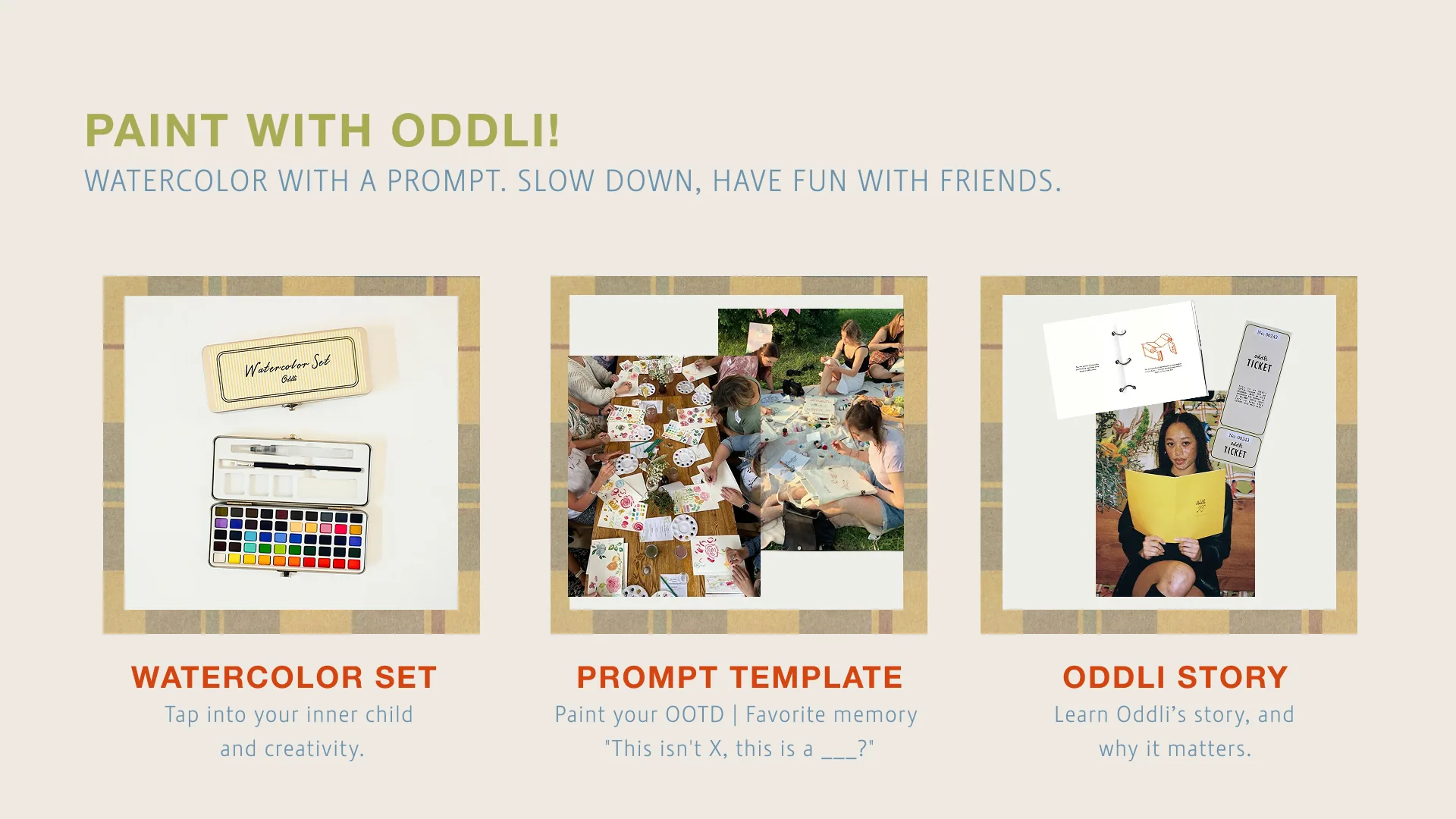
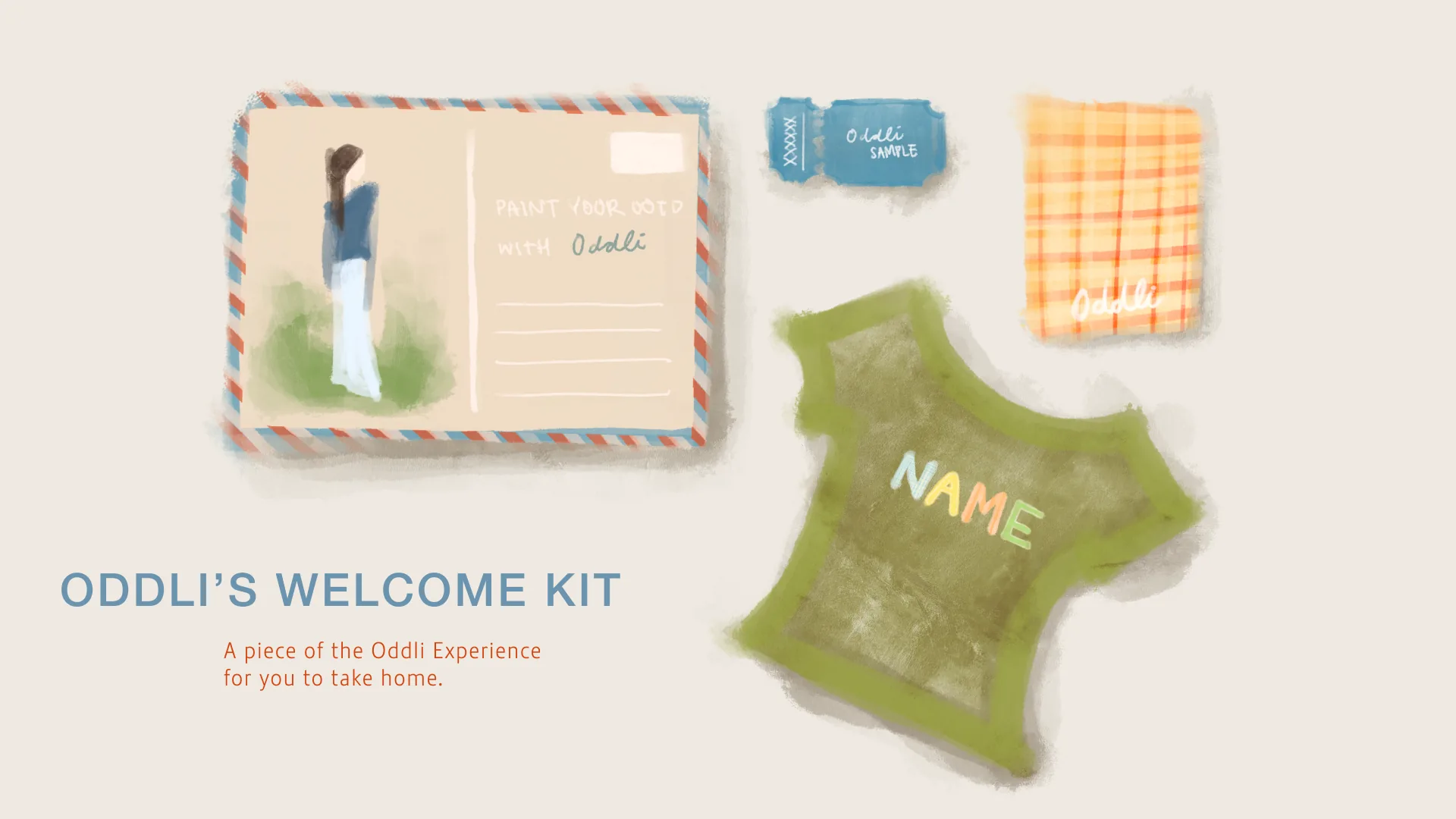
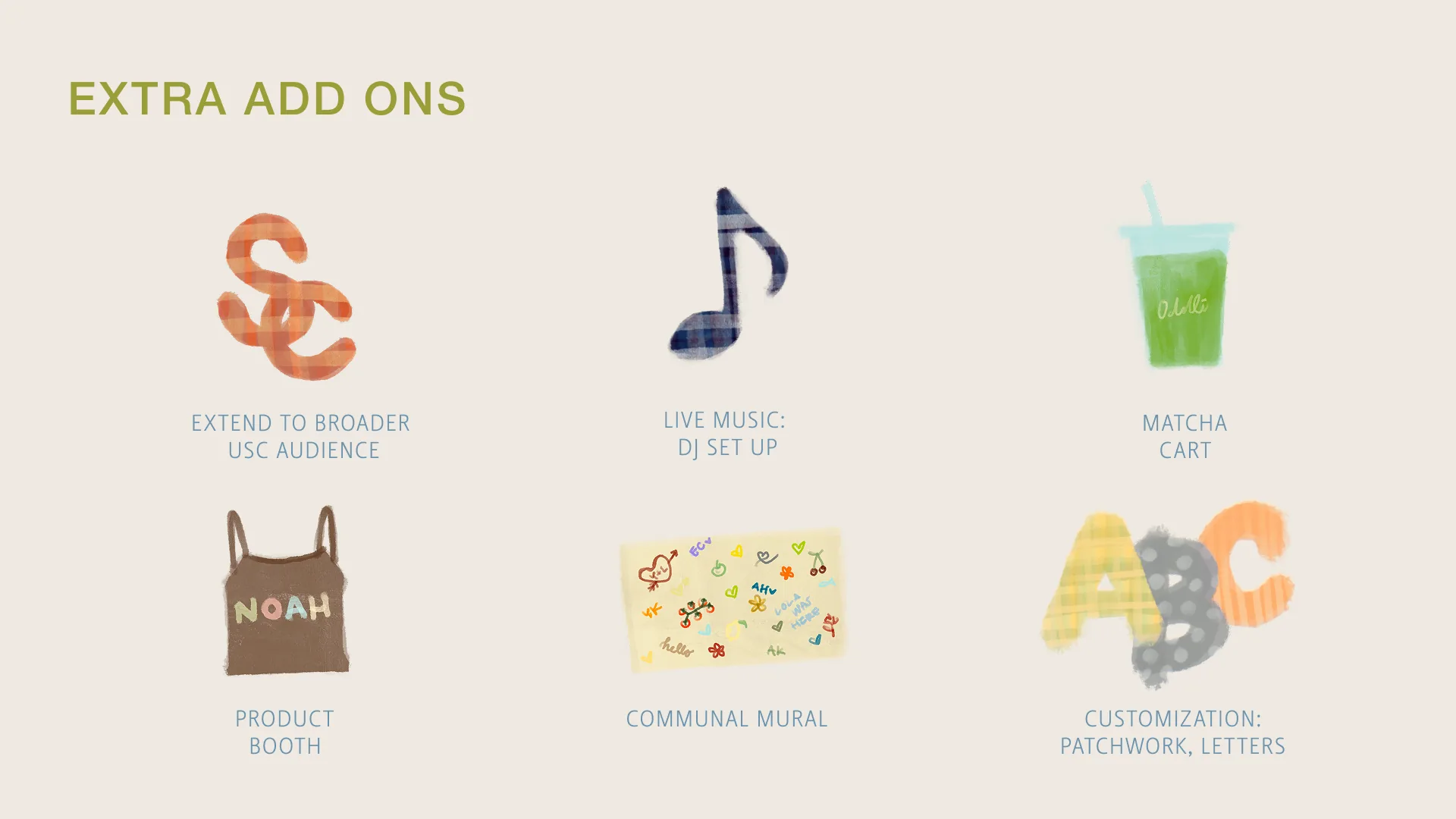
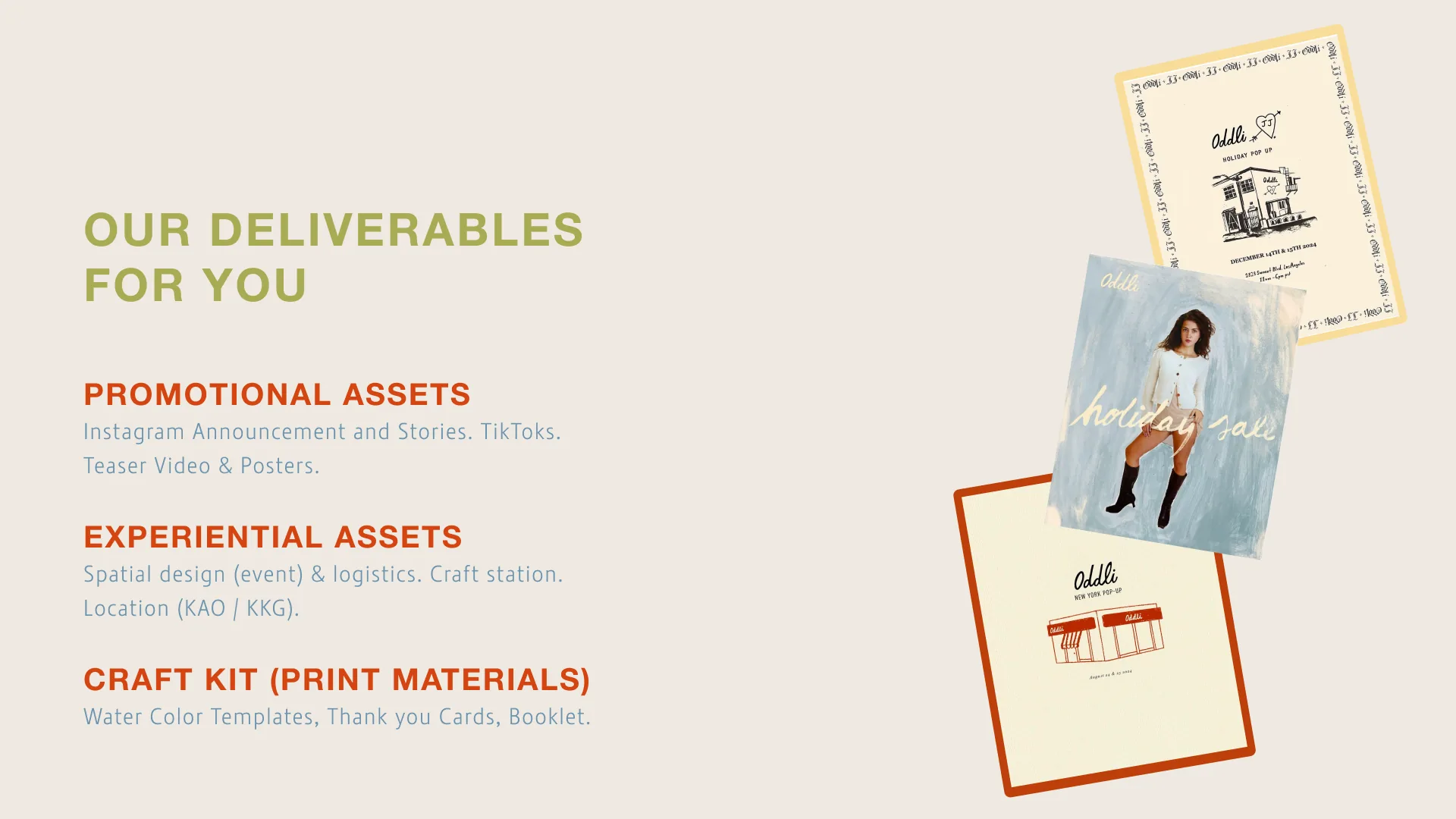
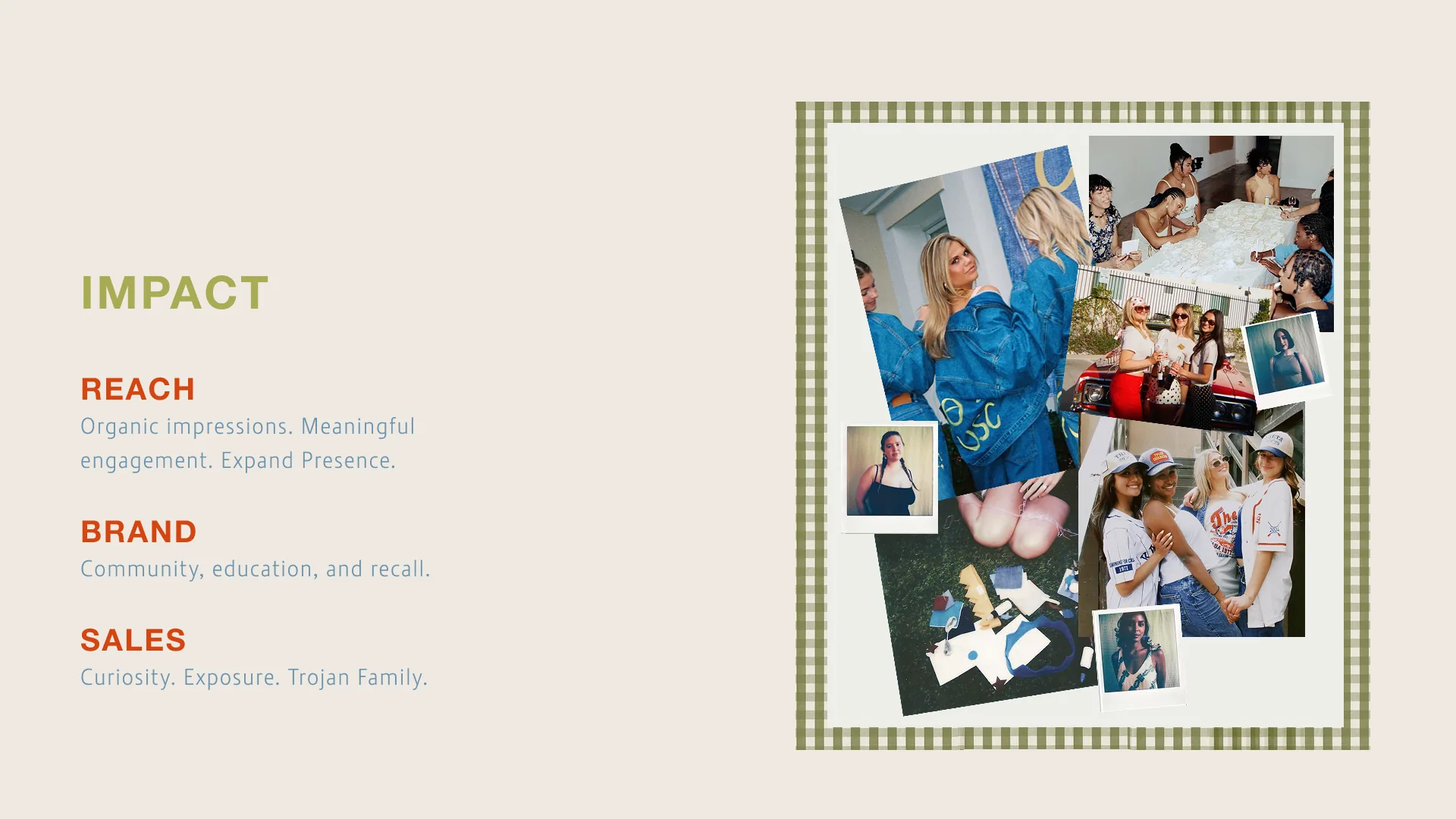
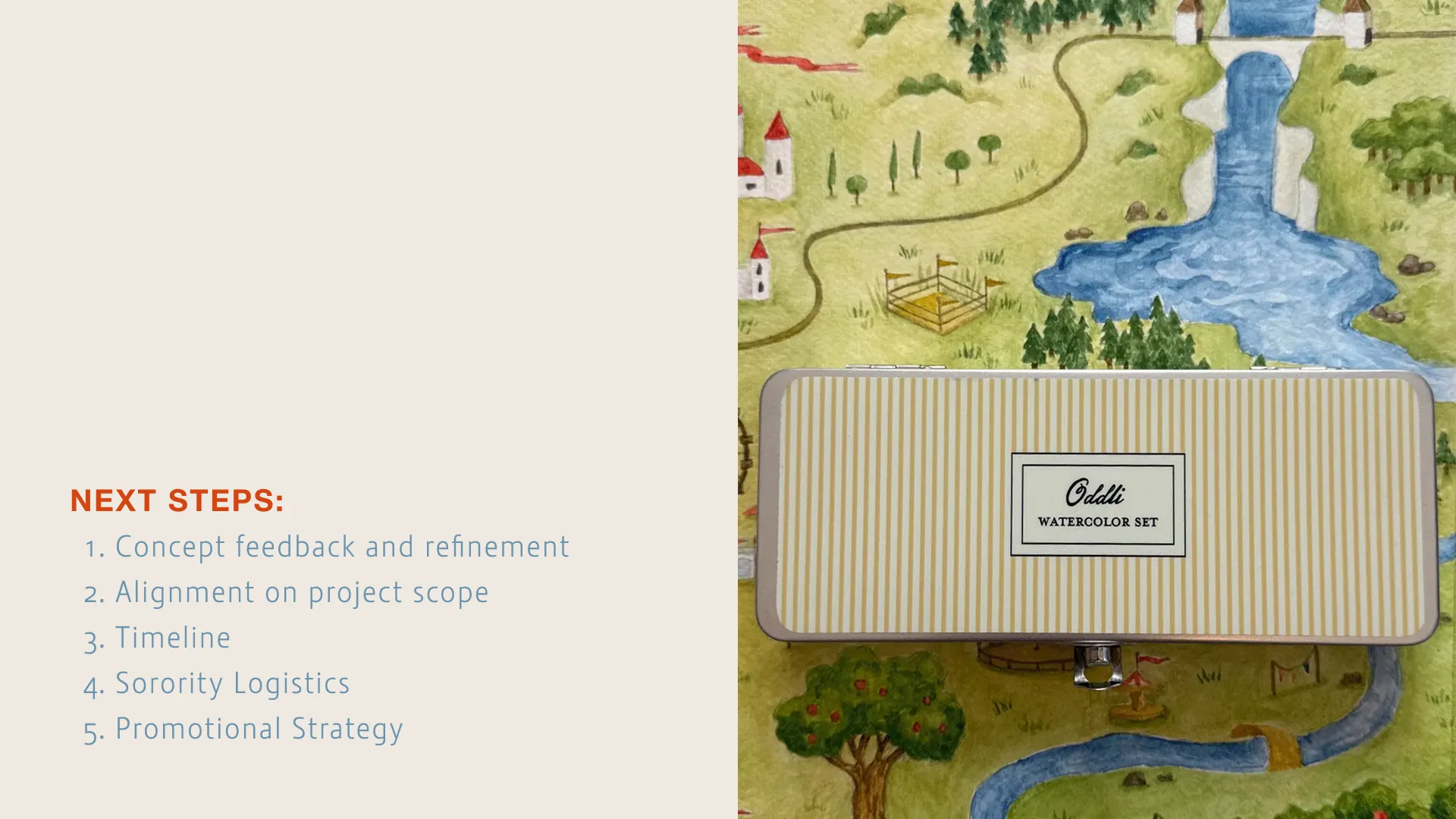
the Original Pitch
Pitched: A watercolor craft station, built to slow guests down.
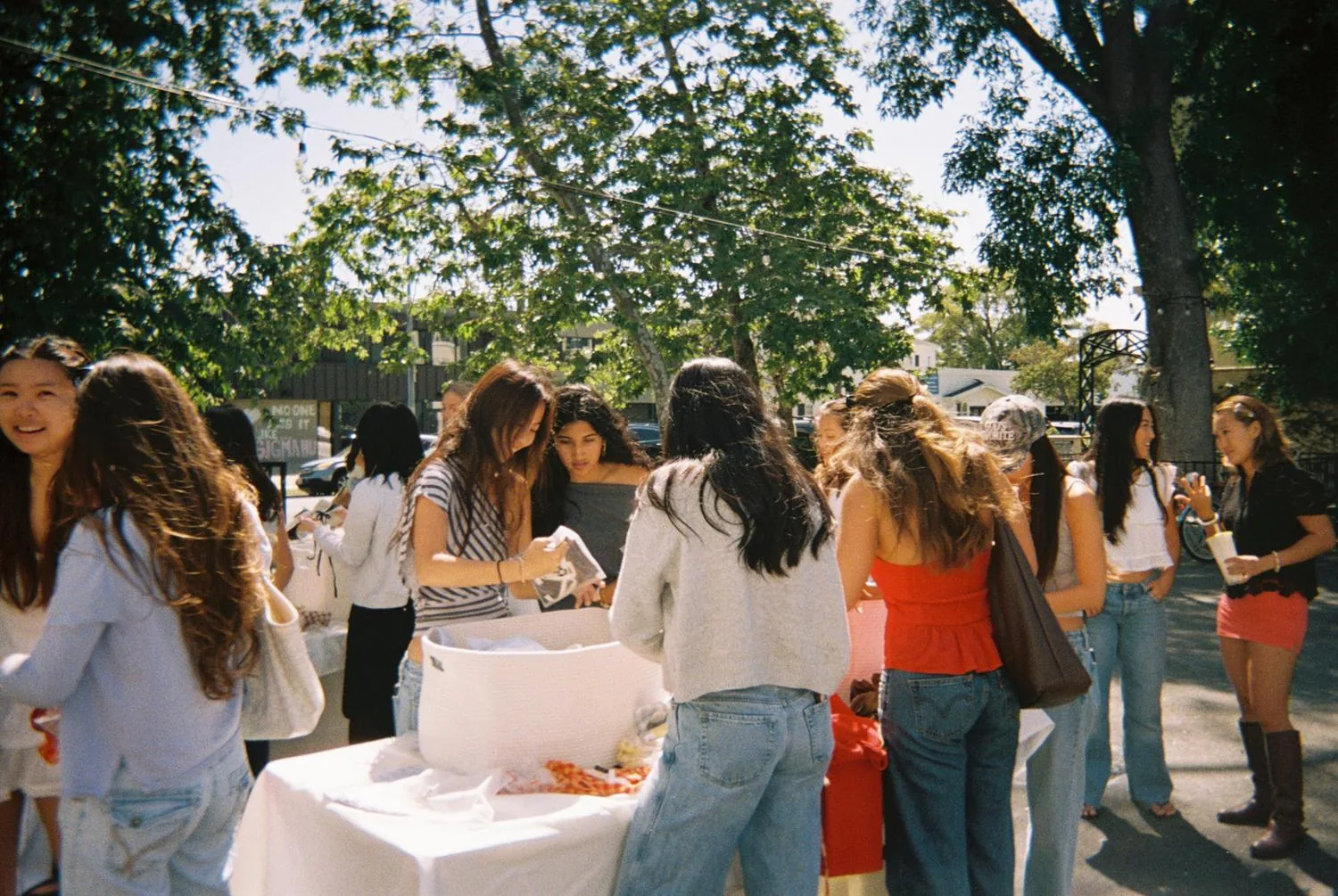
Pivot
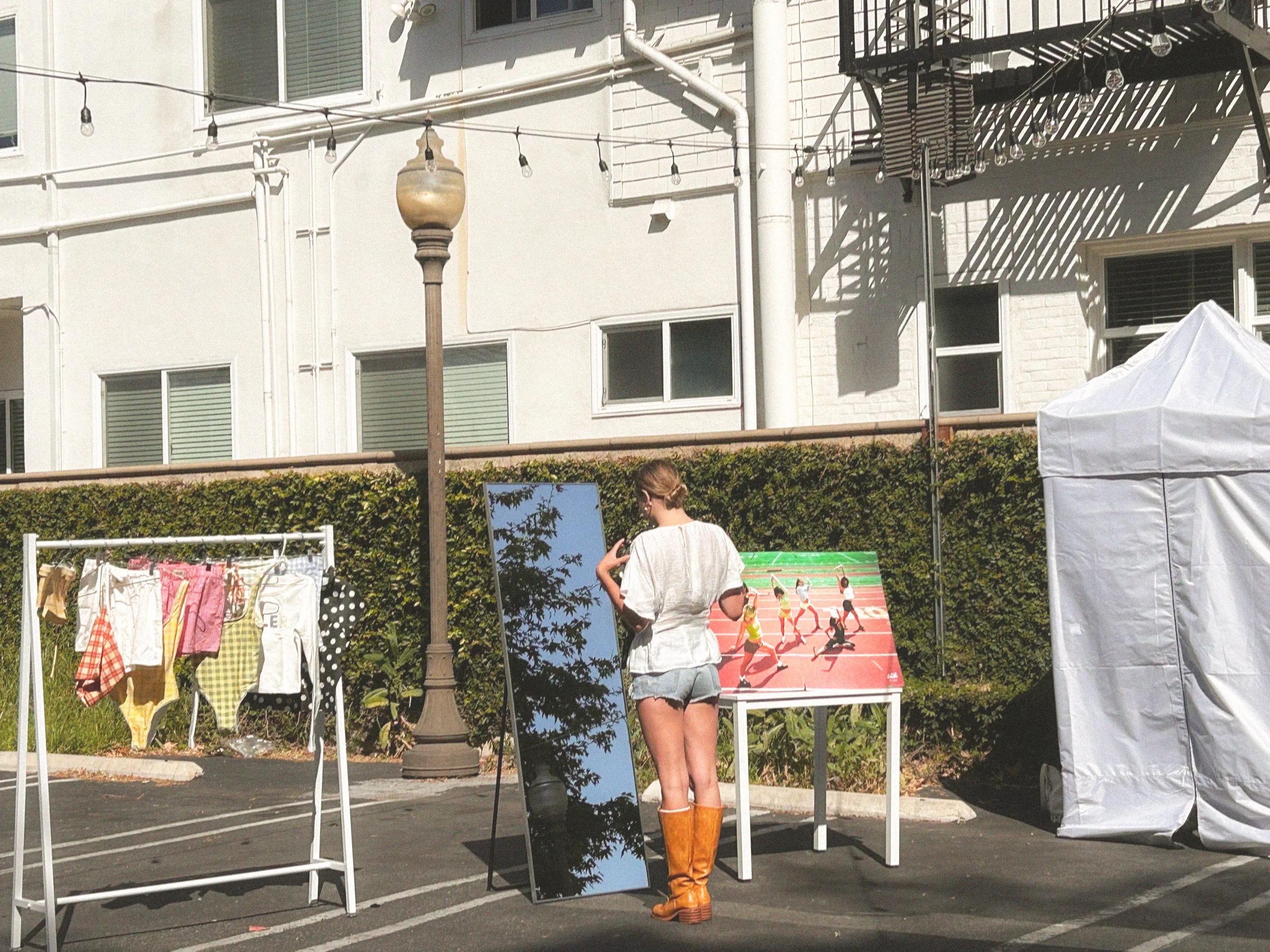
Built: a sample sale designed to introduce audience to the brand.
The pop-up needed to exemplify how Oddli was becoming a real, elevated lifestyle brand, not just a playful fashion startup. Since the budget couldn’t buy production value on its own, every physical choice (scent, pacing, sight lines) had to carry that argument instead. Our goal was to make a parking lot feel like a curated space, not a folding-table garage sale.
Planning
Visitor Flow
The event was laid out in three zones:
Zone #1: Entrance
A decompression zone that paces the arrival before guests reach product.
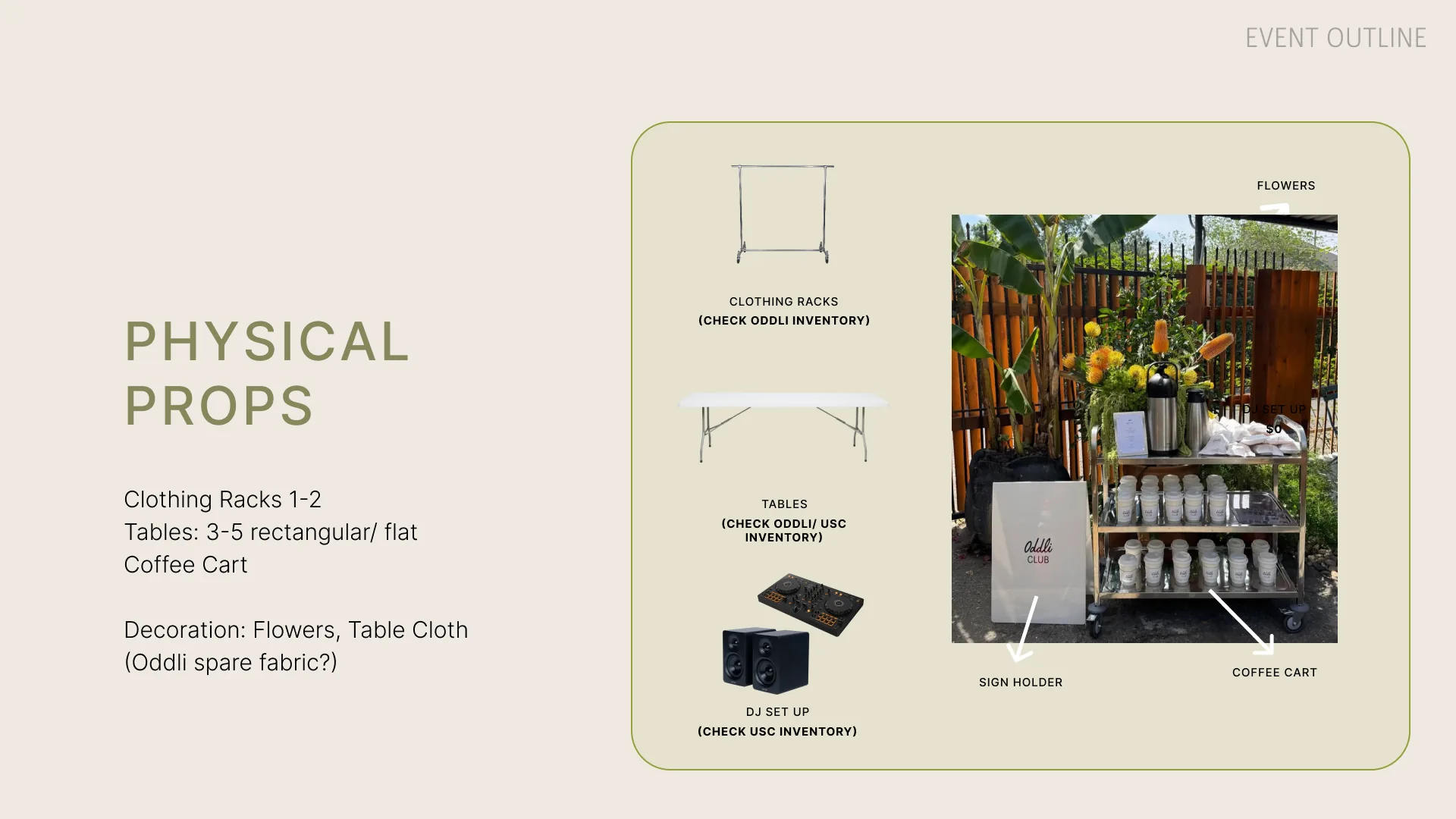
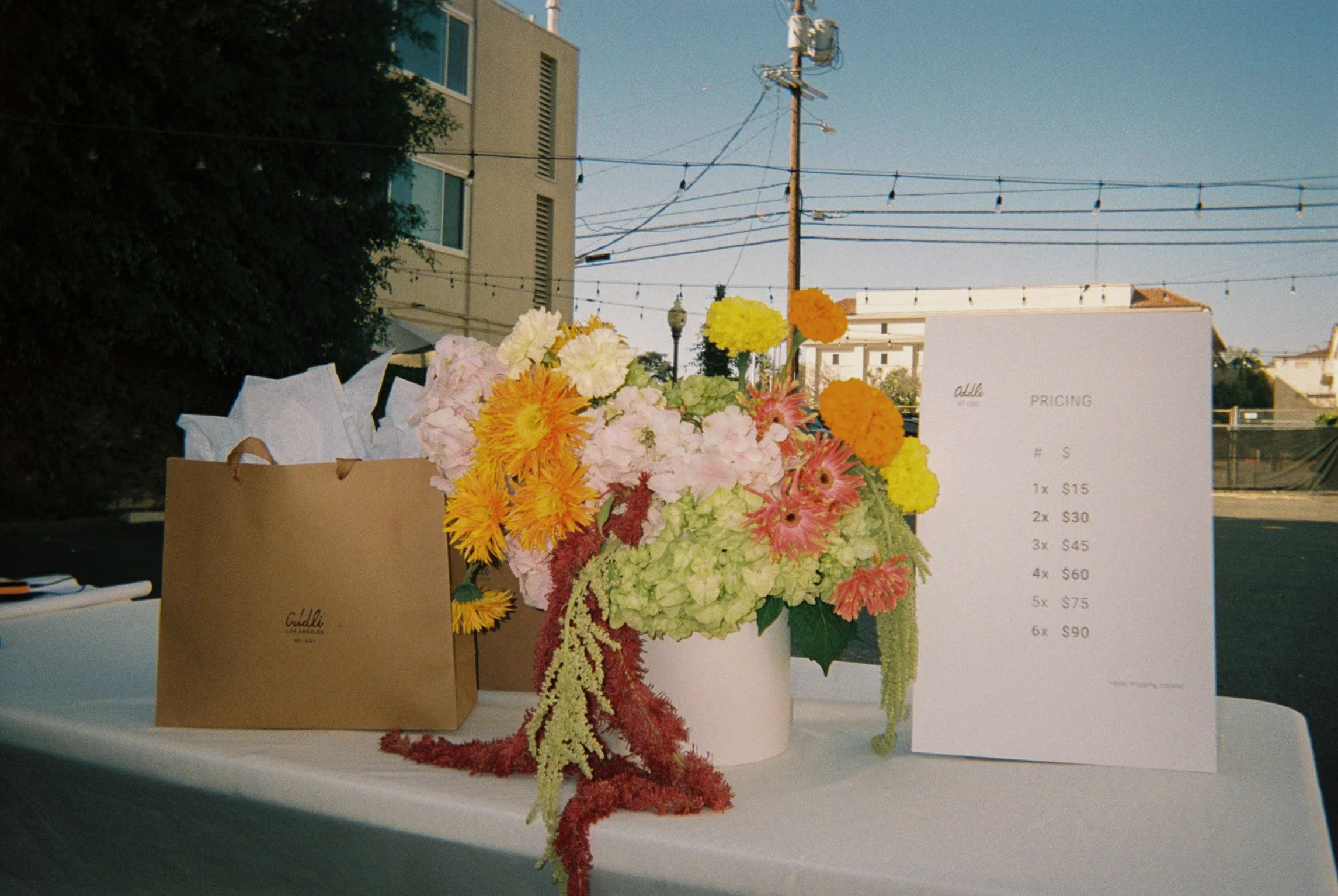
Flowers
Oddli at USC signage
Scent mapping
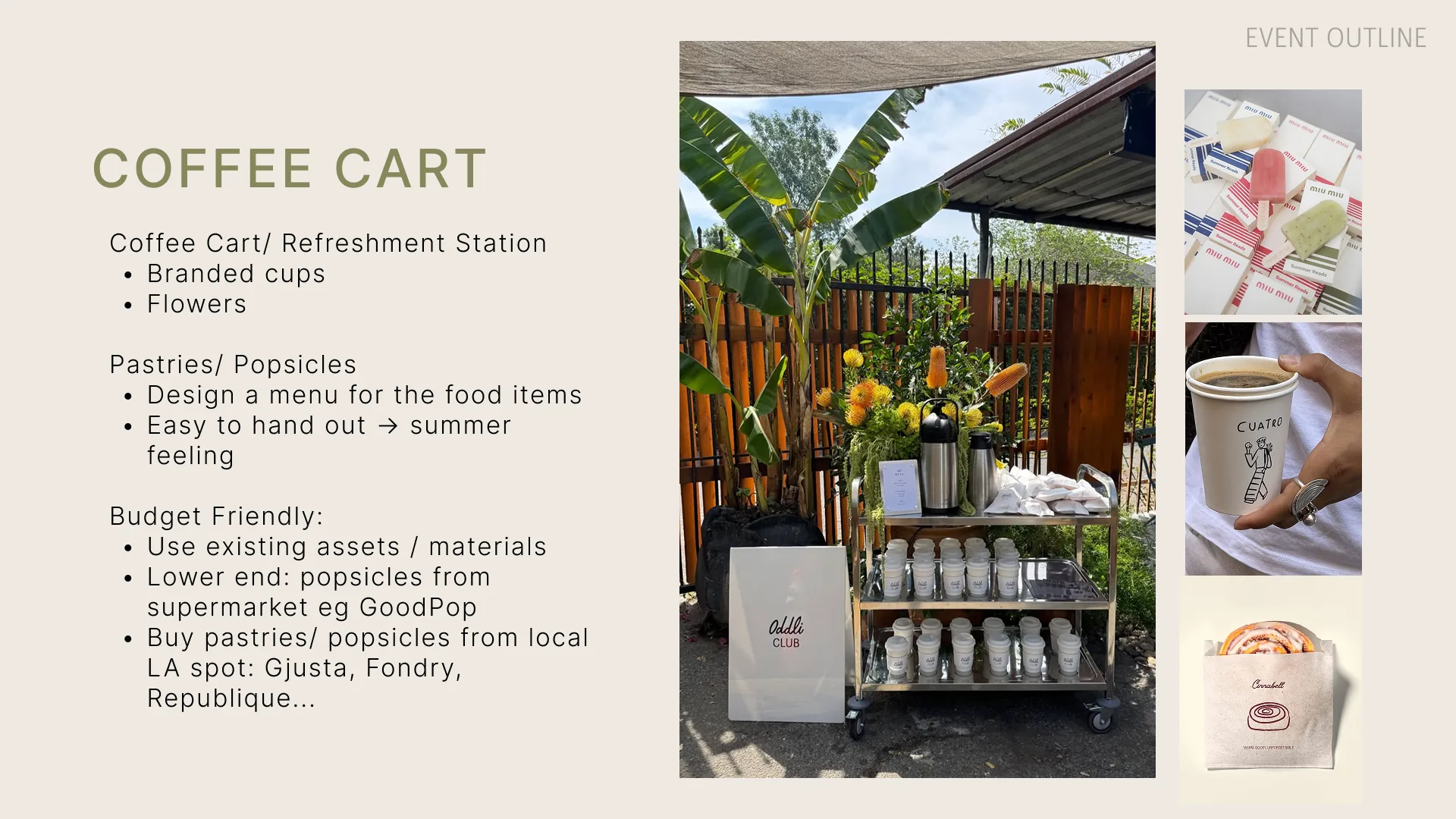
Line Experience – welcome staff handing out samples/refreshments
Zone #2: Sample Sale
The transactional core, where guests shop, try on, and check out.
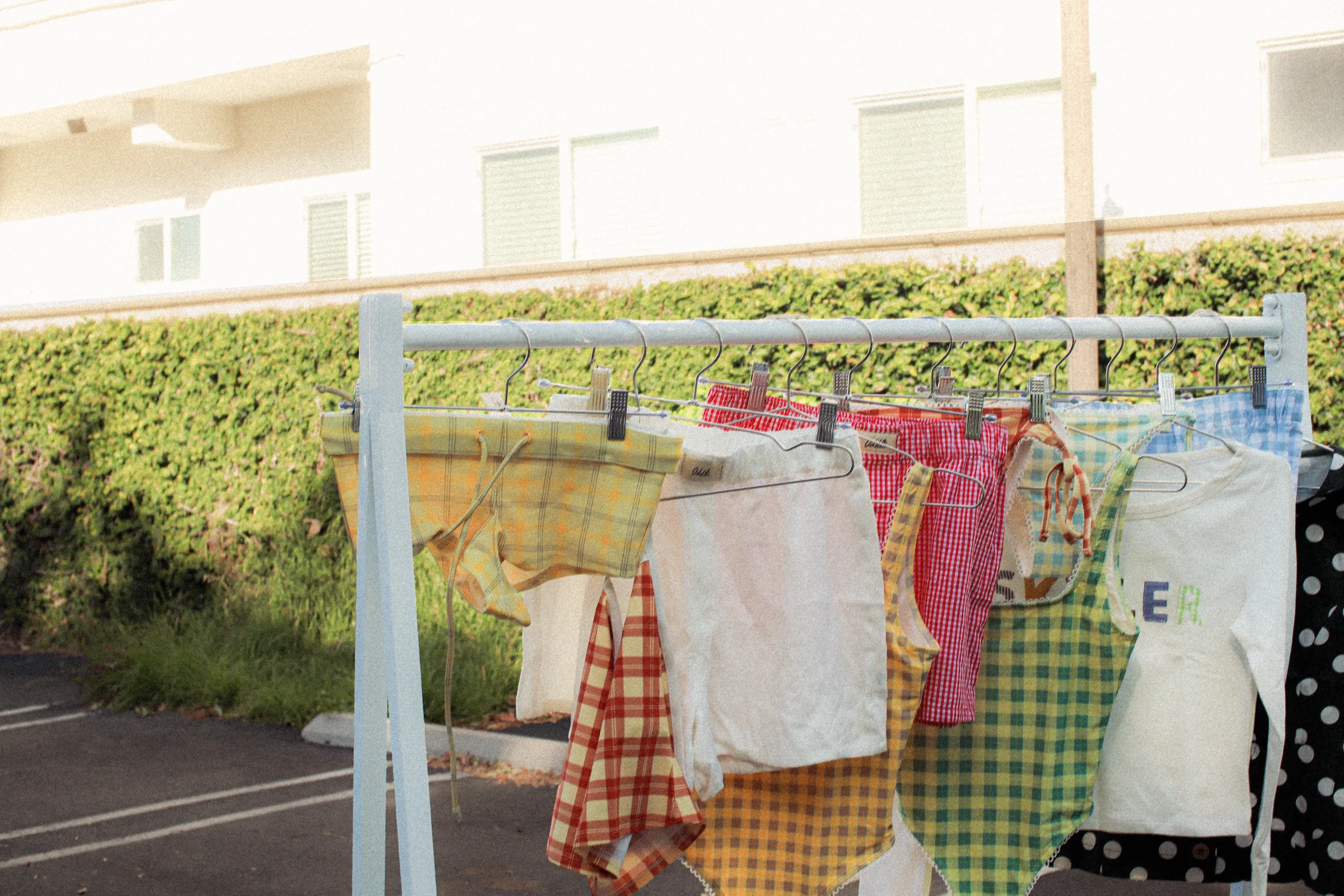
Display Rack – highlights key products
Size Baskets – organized by product type
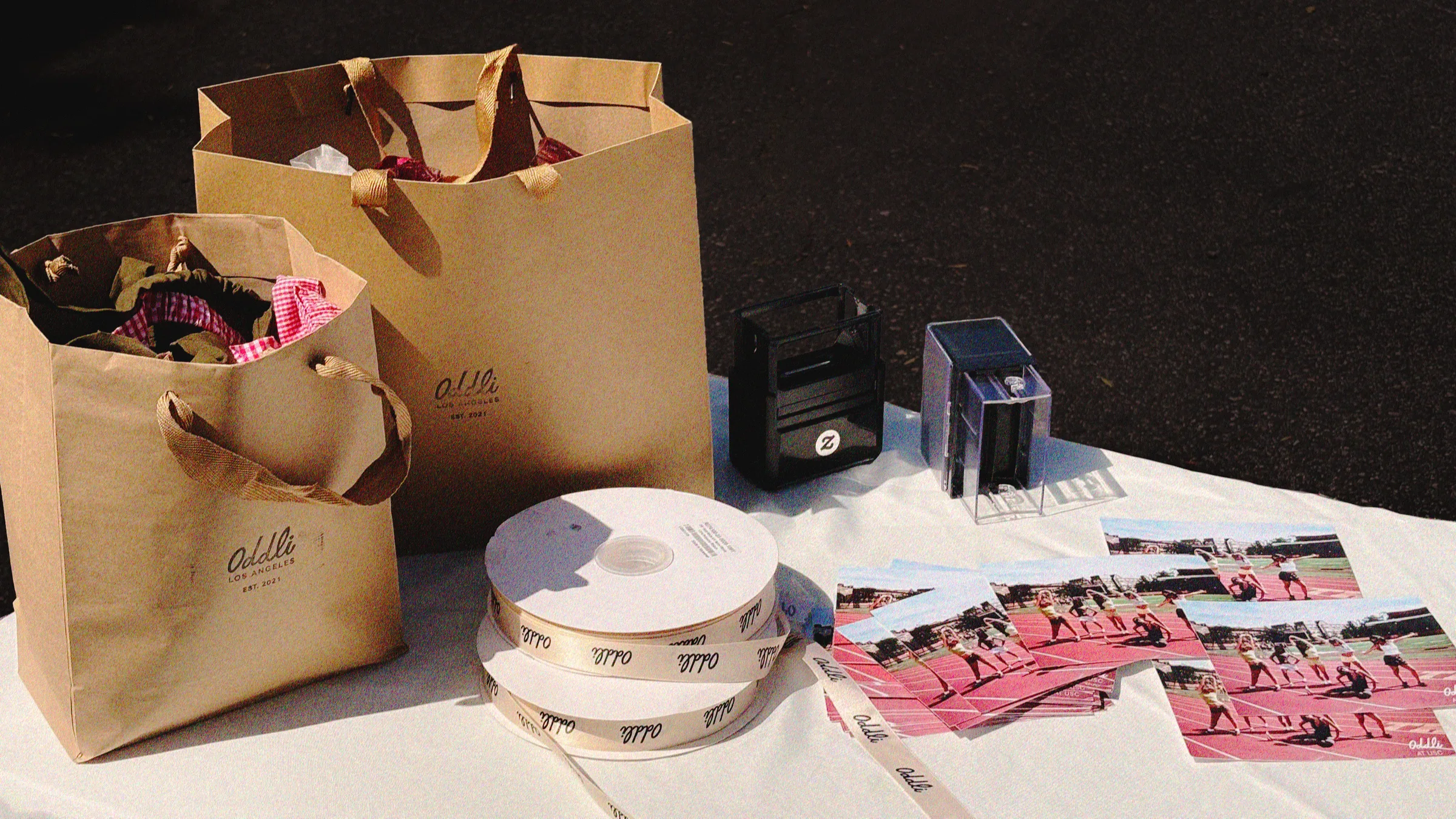
Check out – POS and packaging ephemera
Gift with purchase – cloth headband, postcard, stickers, and stamps
Zone #3: DJ & Refreshments
A social space designed to make guests linger.
DJ Stand
Additional refreshments (drink cart, baked goods, branded popsicles)
Socializing area
The flow shows that Oddli is more than a product drop. It’s an experience.
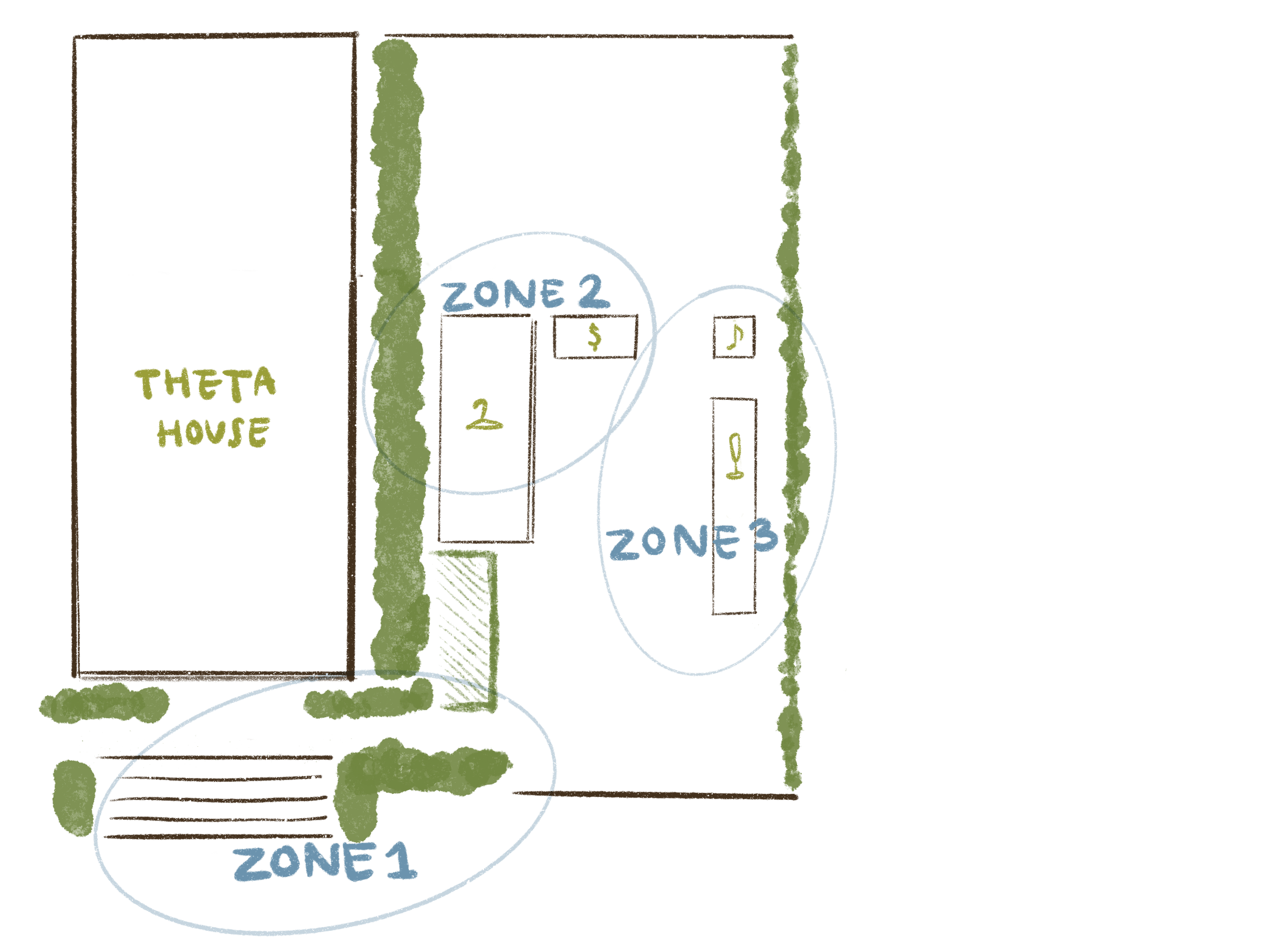
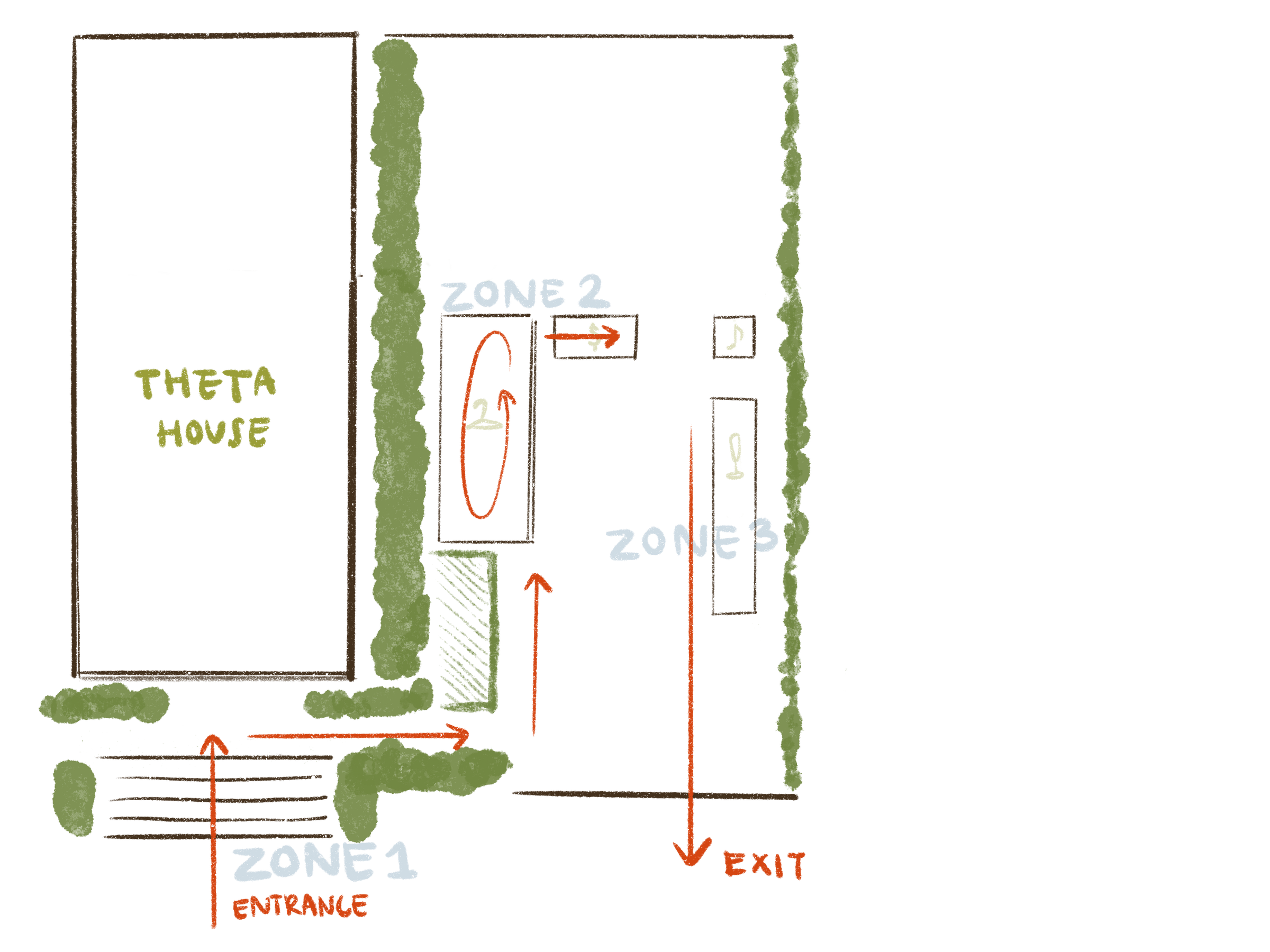
the Original Floor Plan & Flow Map
A narrow entrance path left the center of the space empty. Clockwise flow.
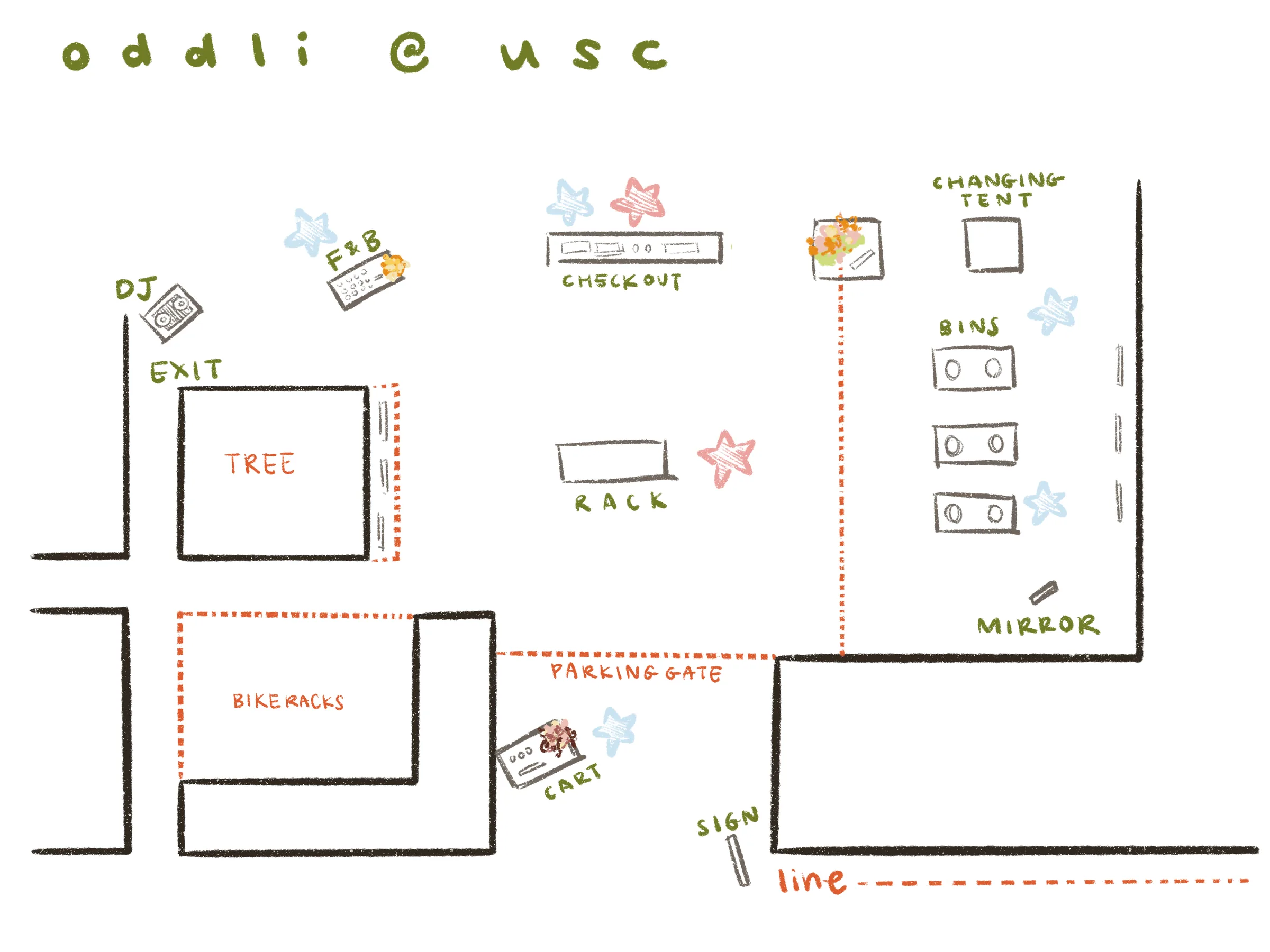
The Revised Floor Plan
Guests enter through the main gate into a counter-clockwise flow, centered on the clothing rack that pulls people toward the middle of the space.
Deliverables
In-House Production
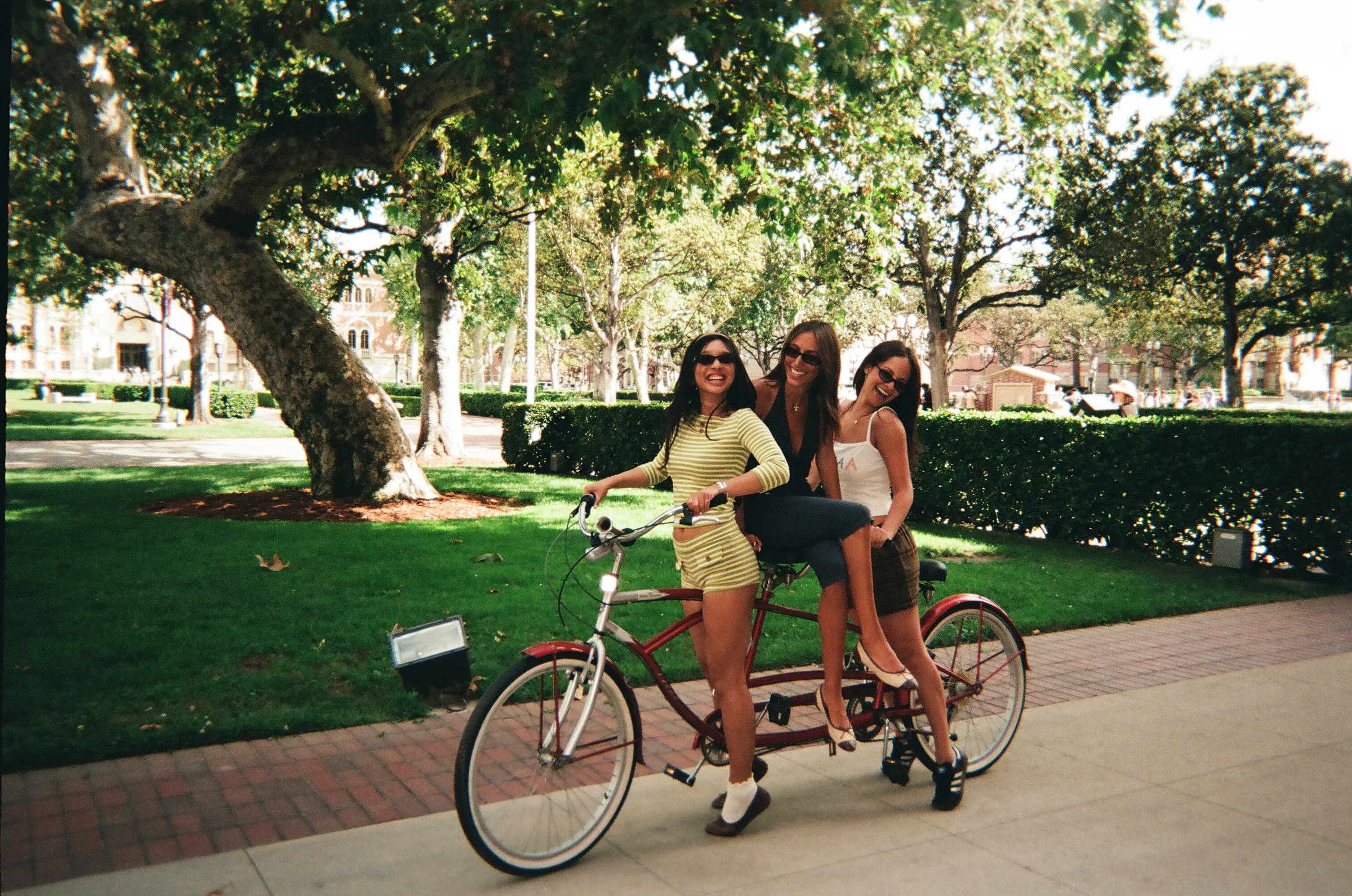
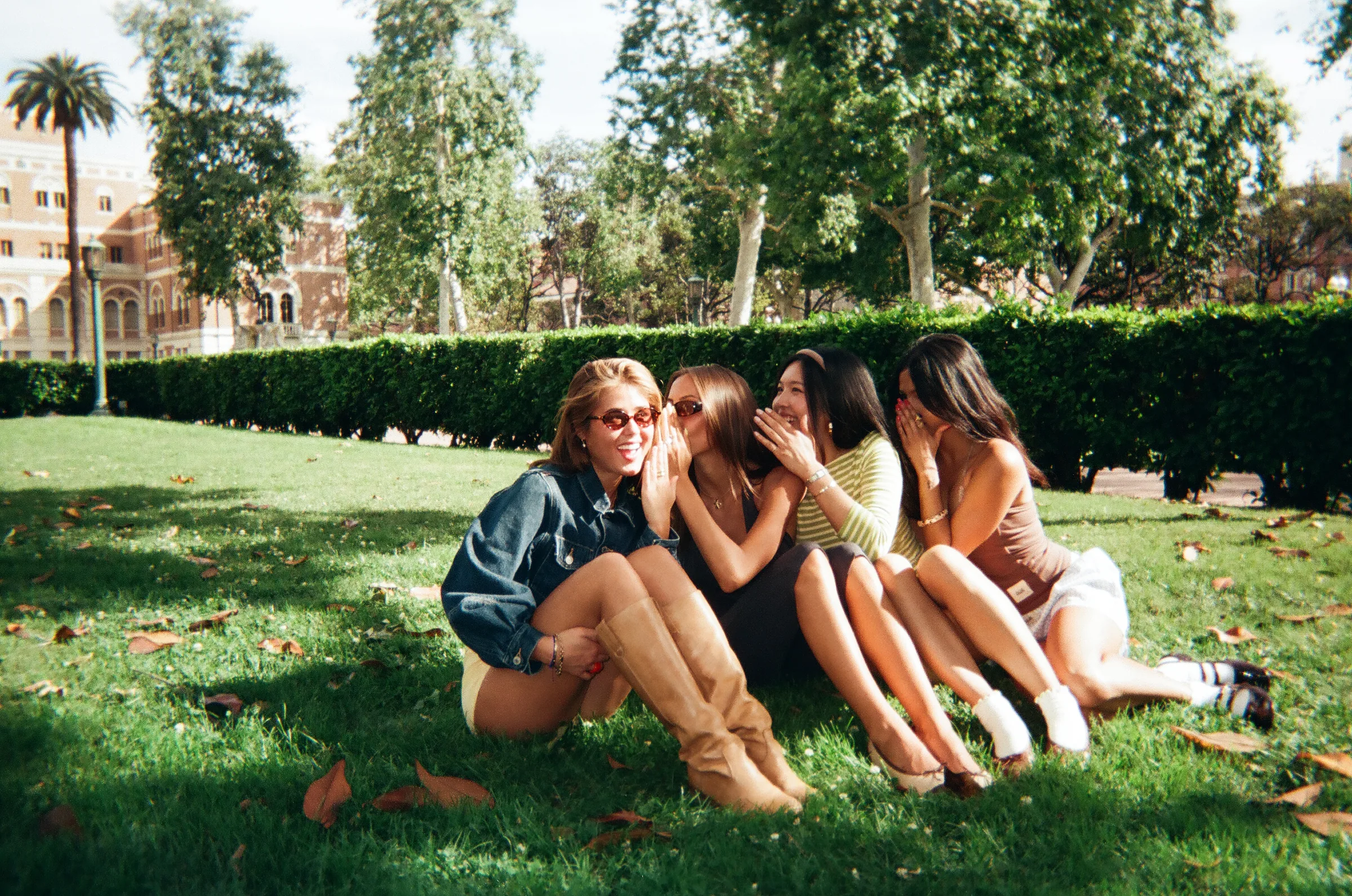
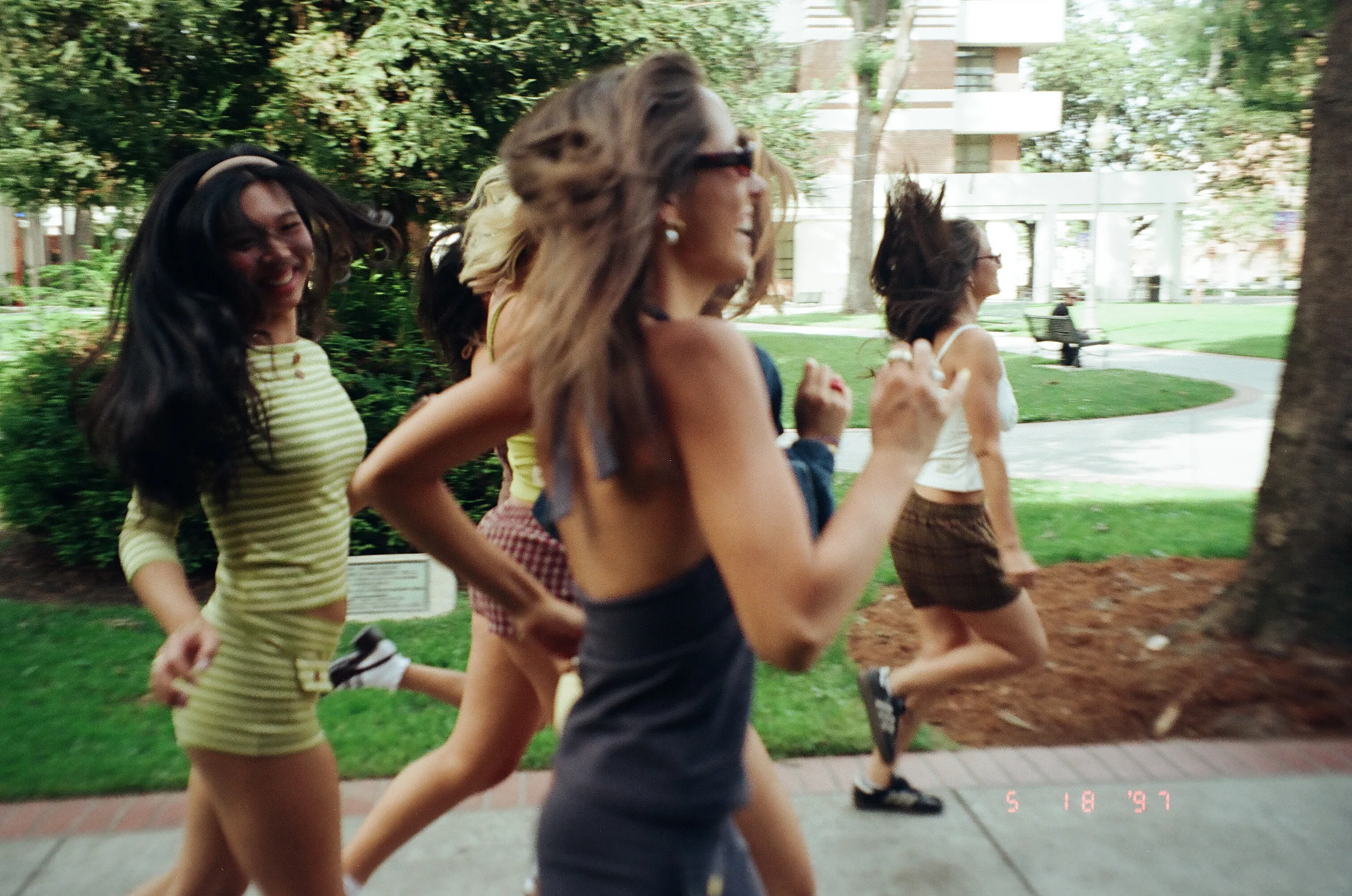
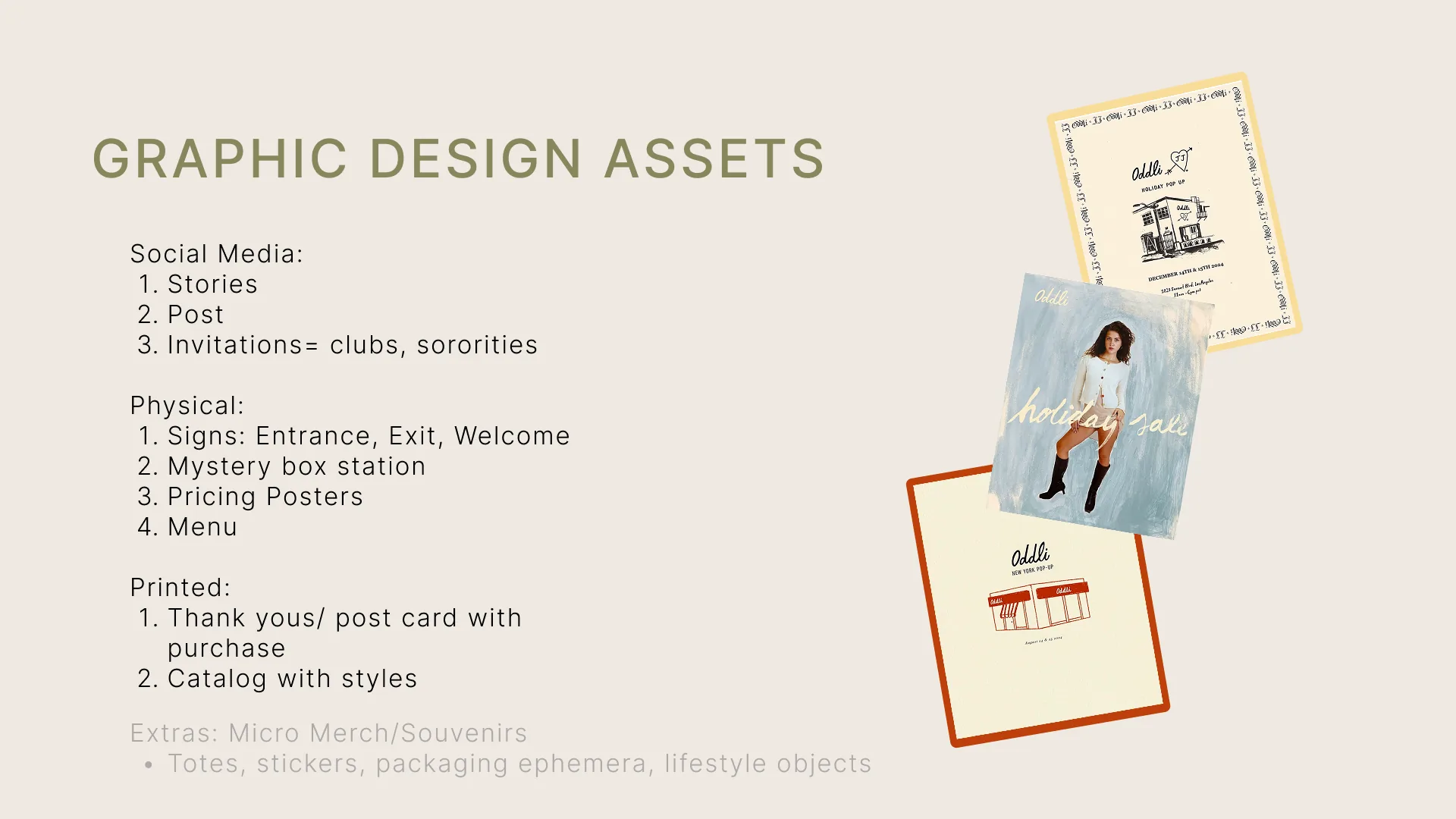
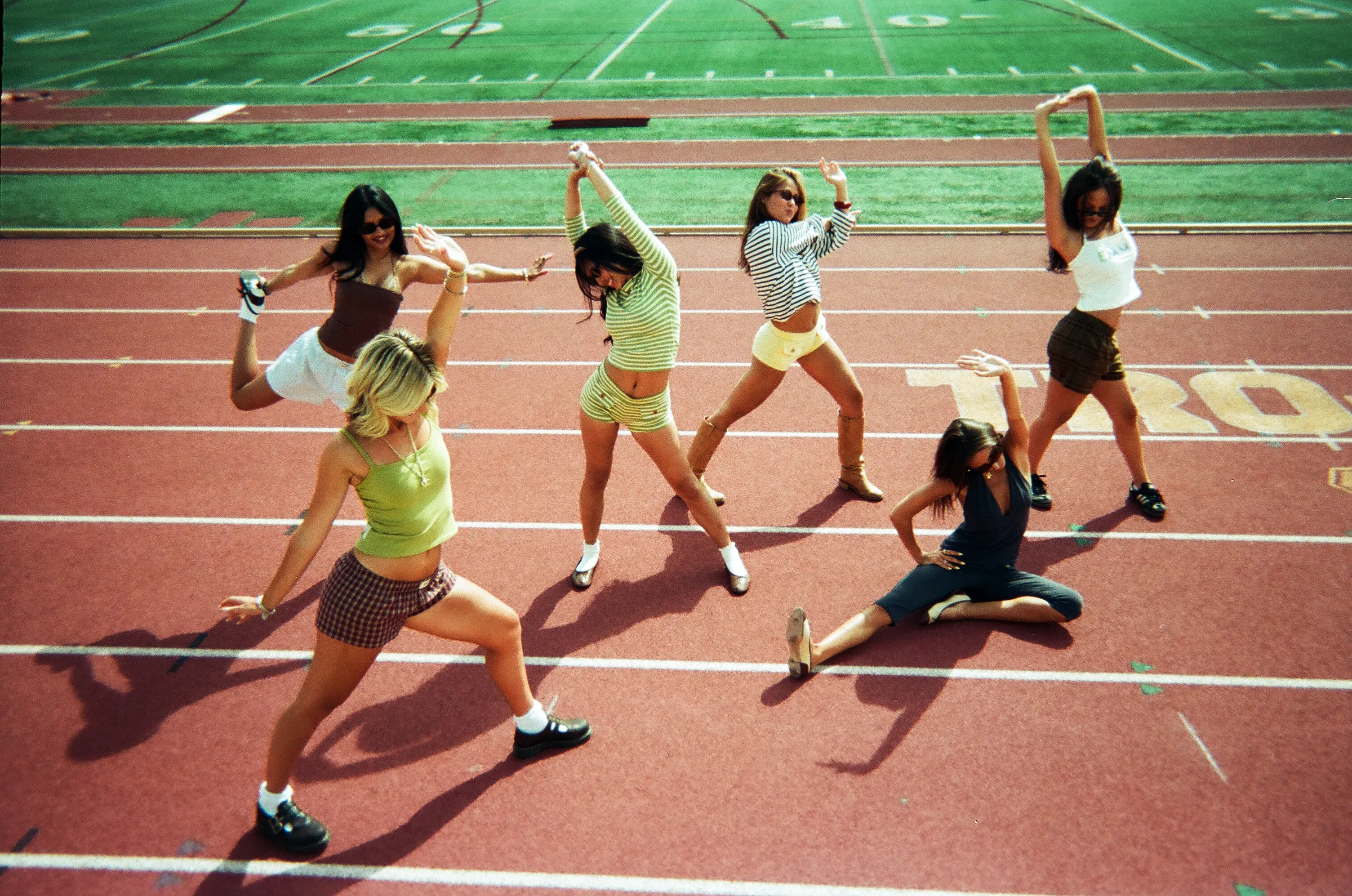
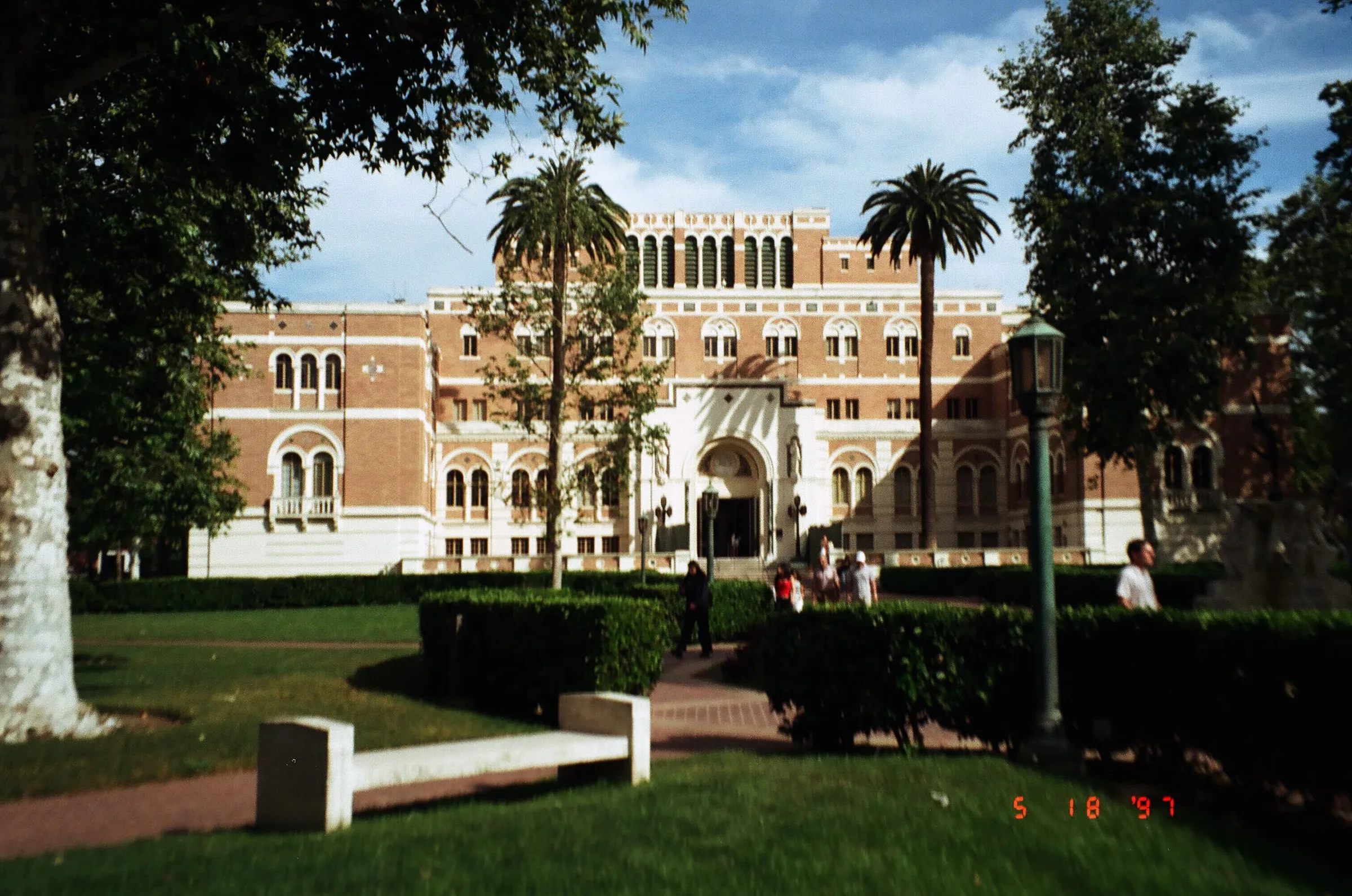
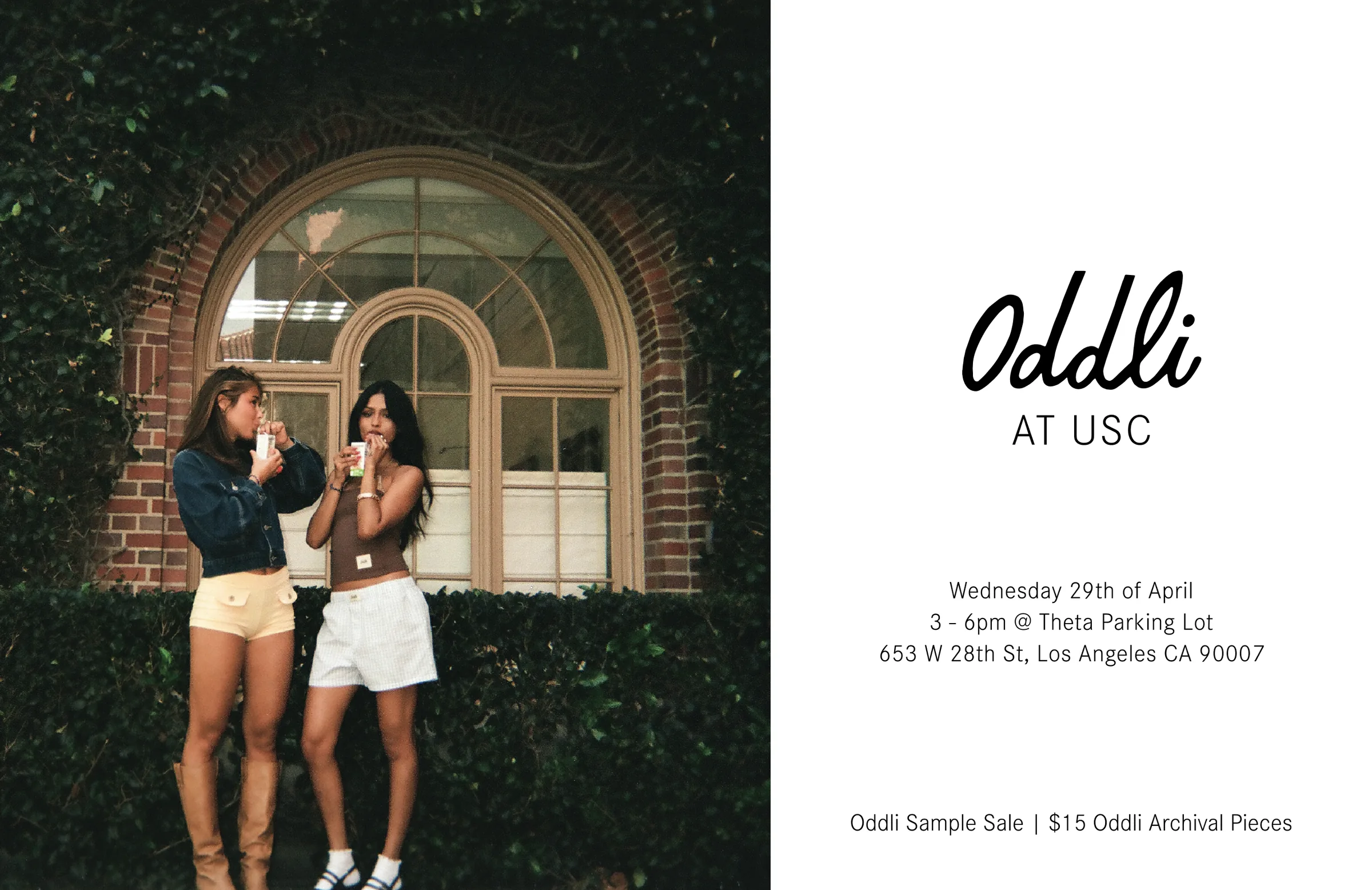
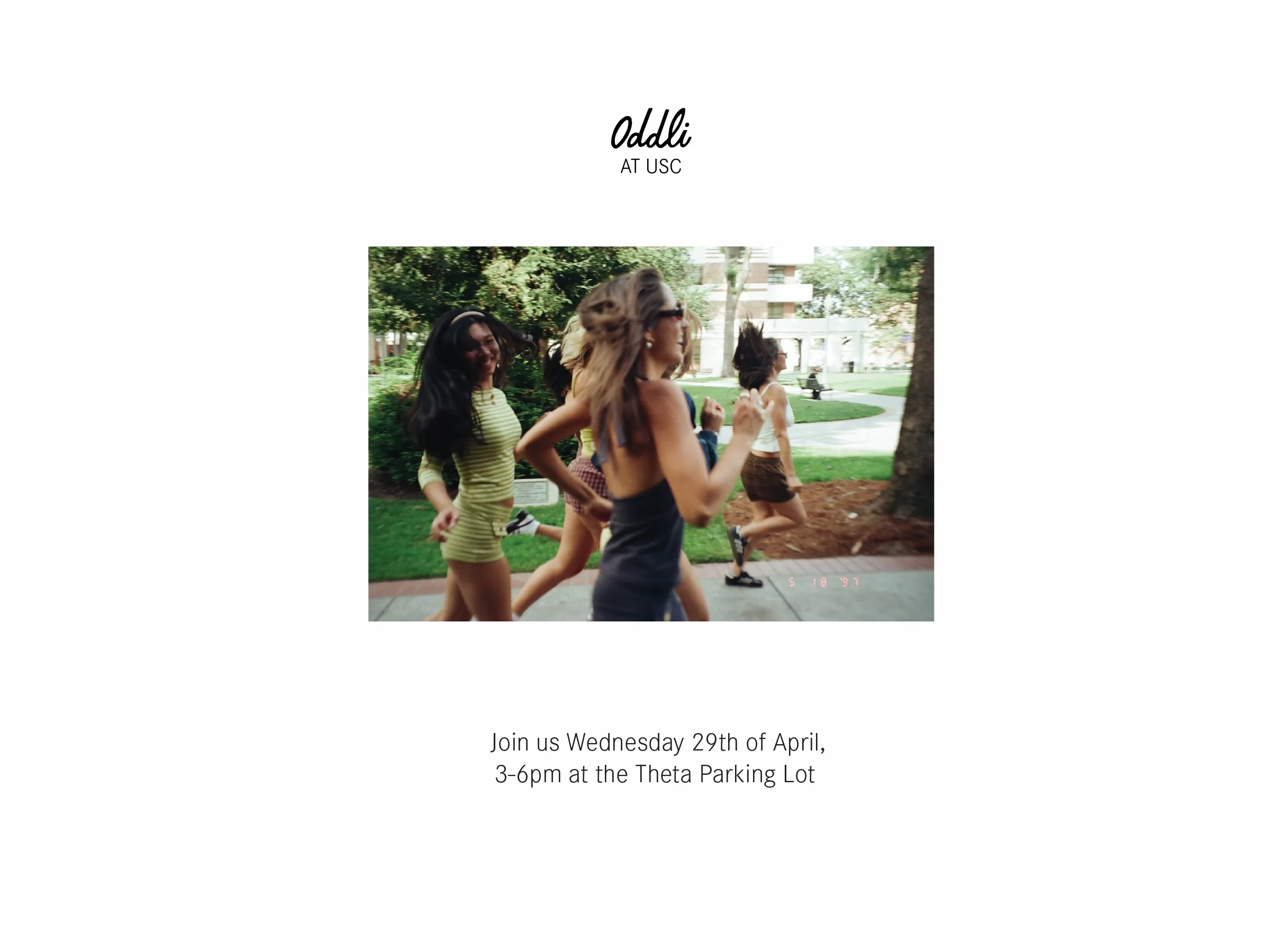
This entire campaign was designed and produced end-to-end: spatial build, signage, floral sourcing, and a full graphic asset pipeline from social posts to printed catalogs.
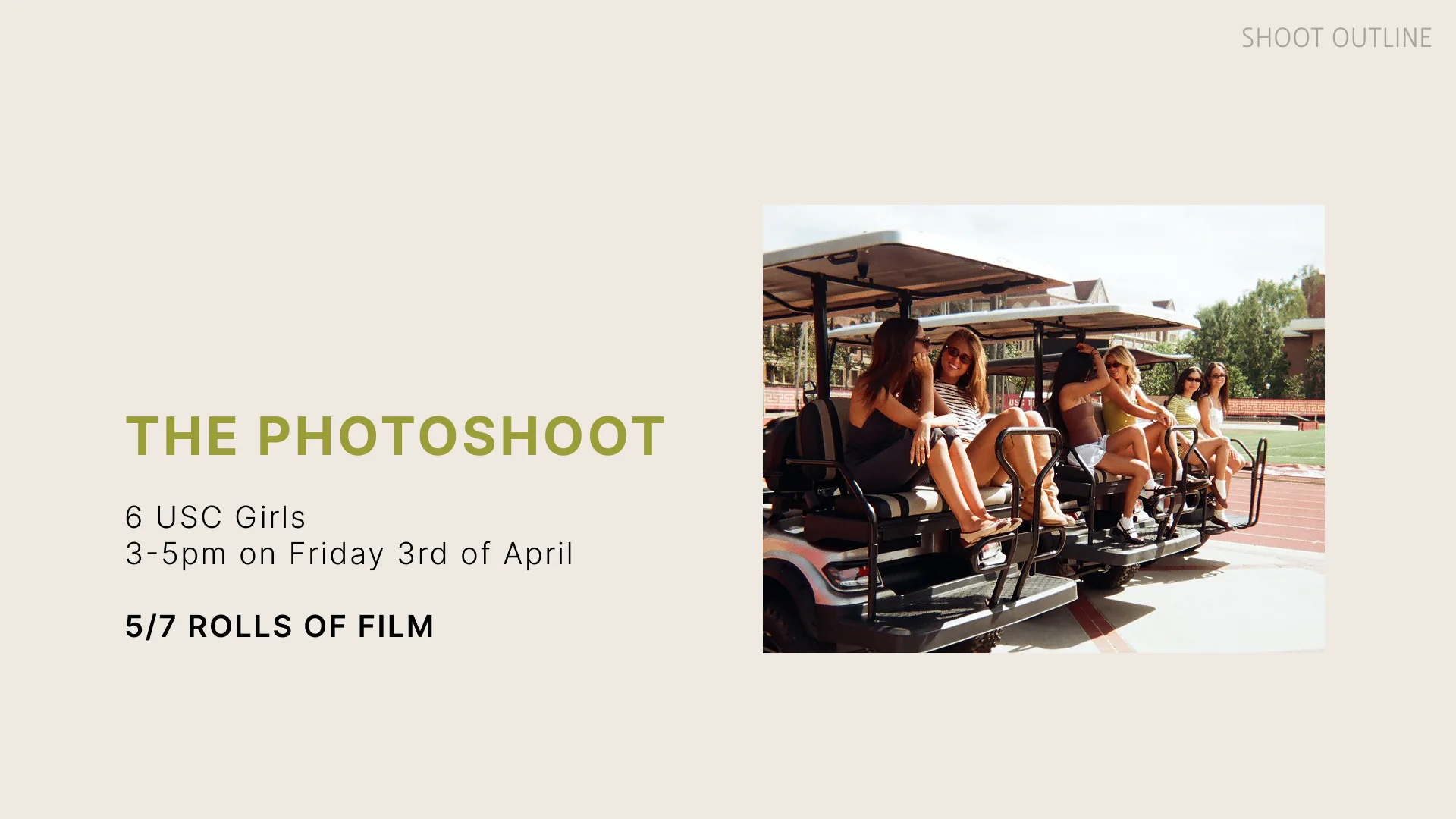
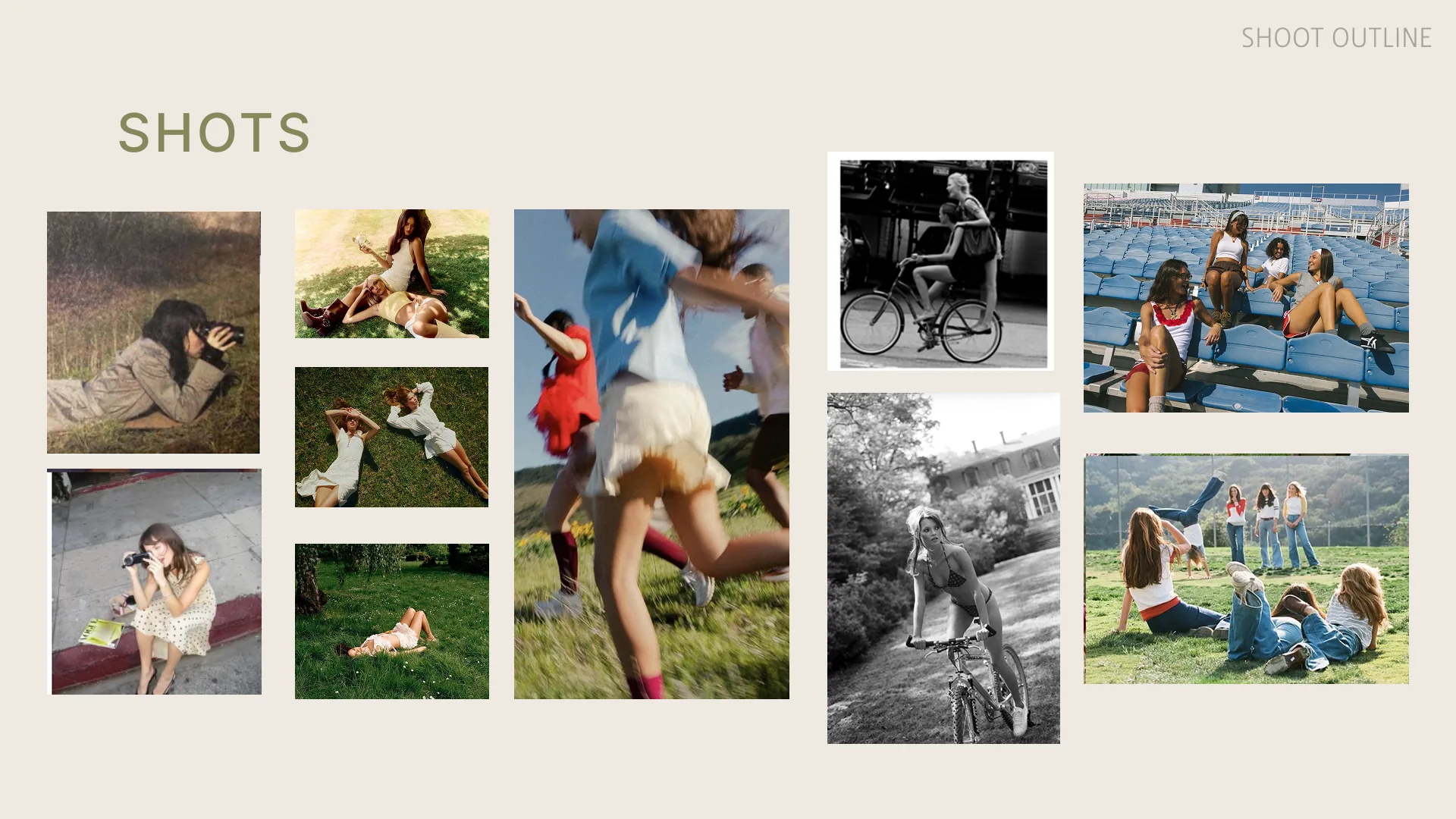
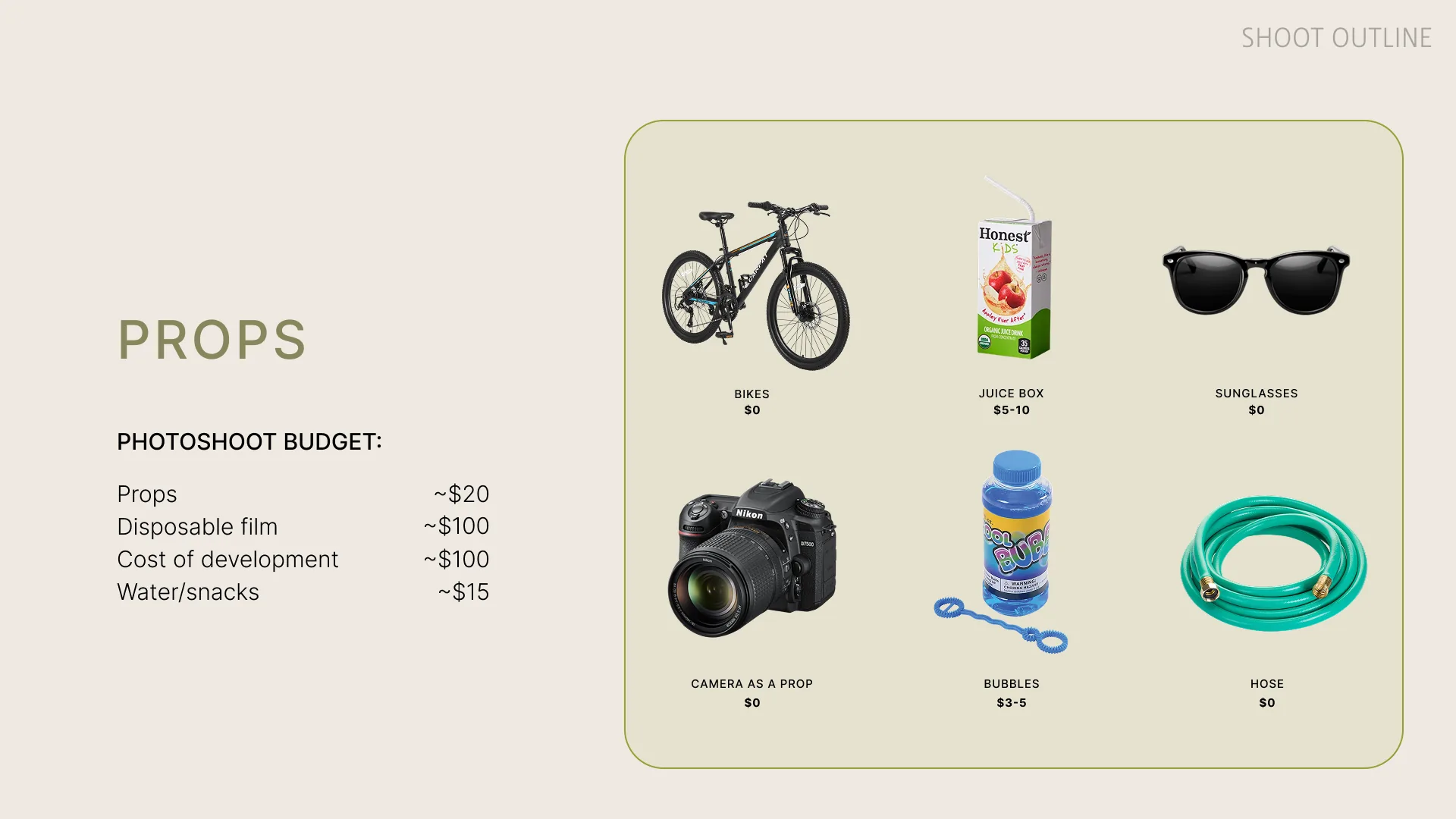
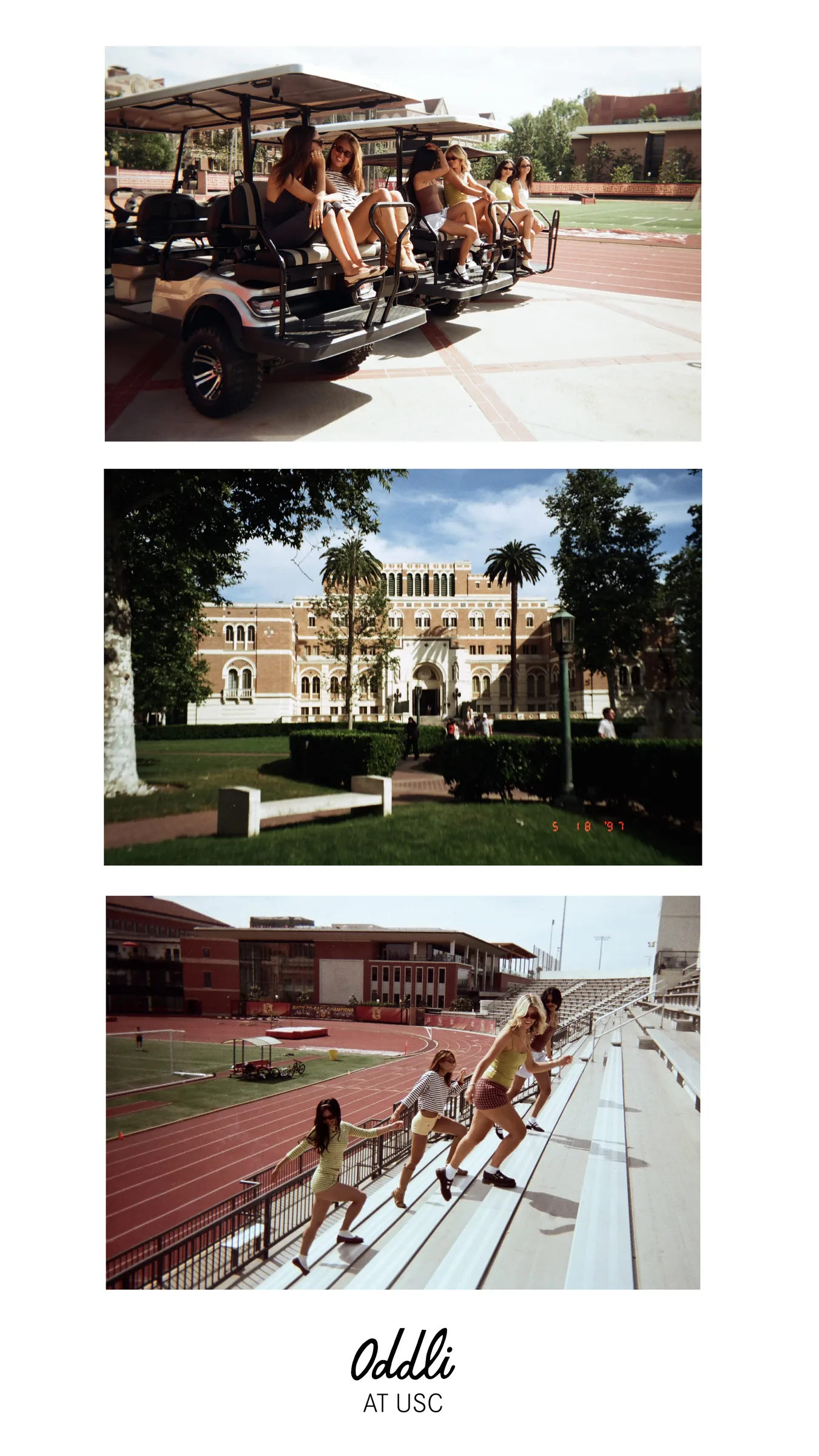
the Photoshoot
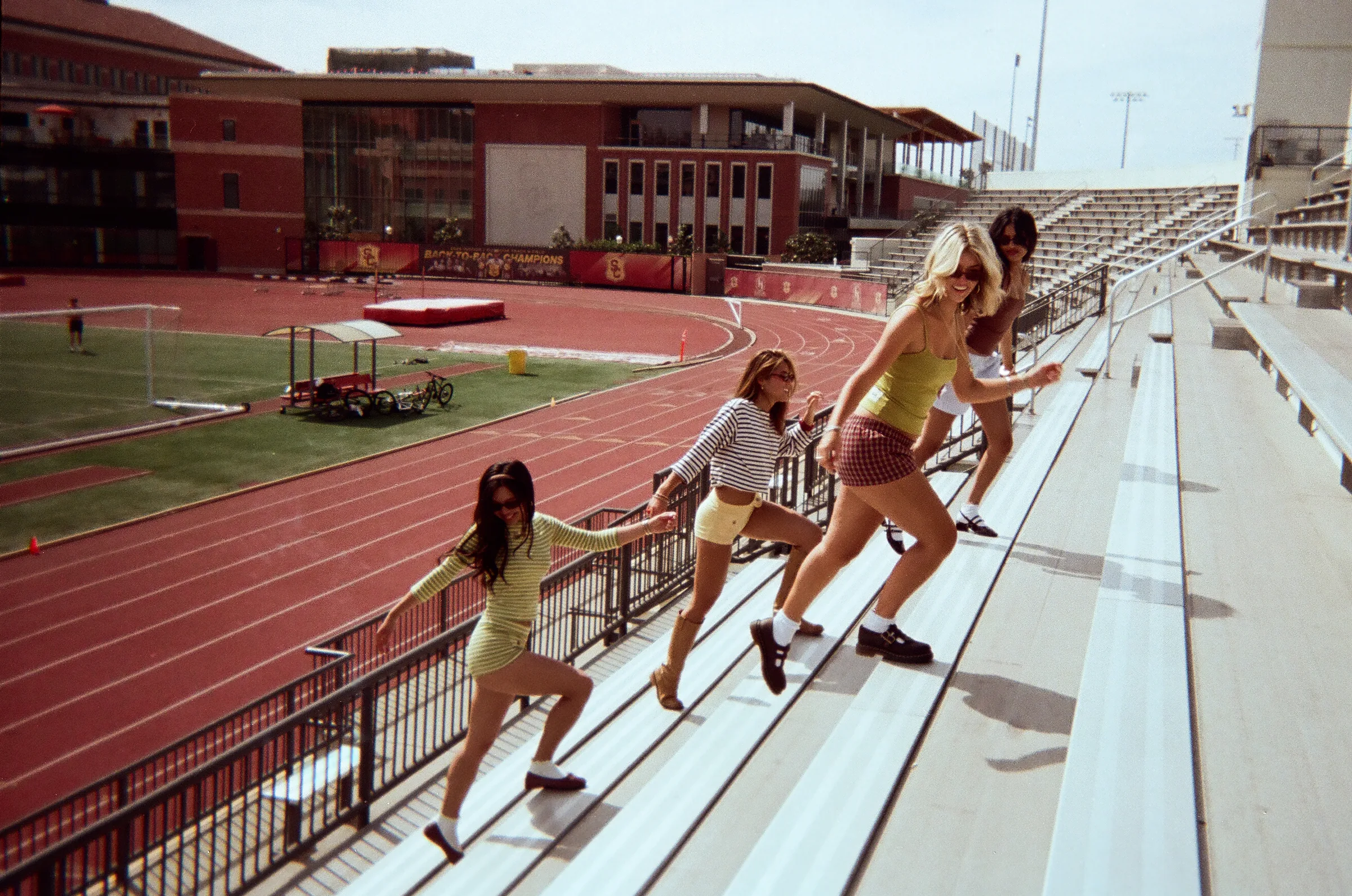
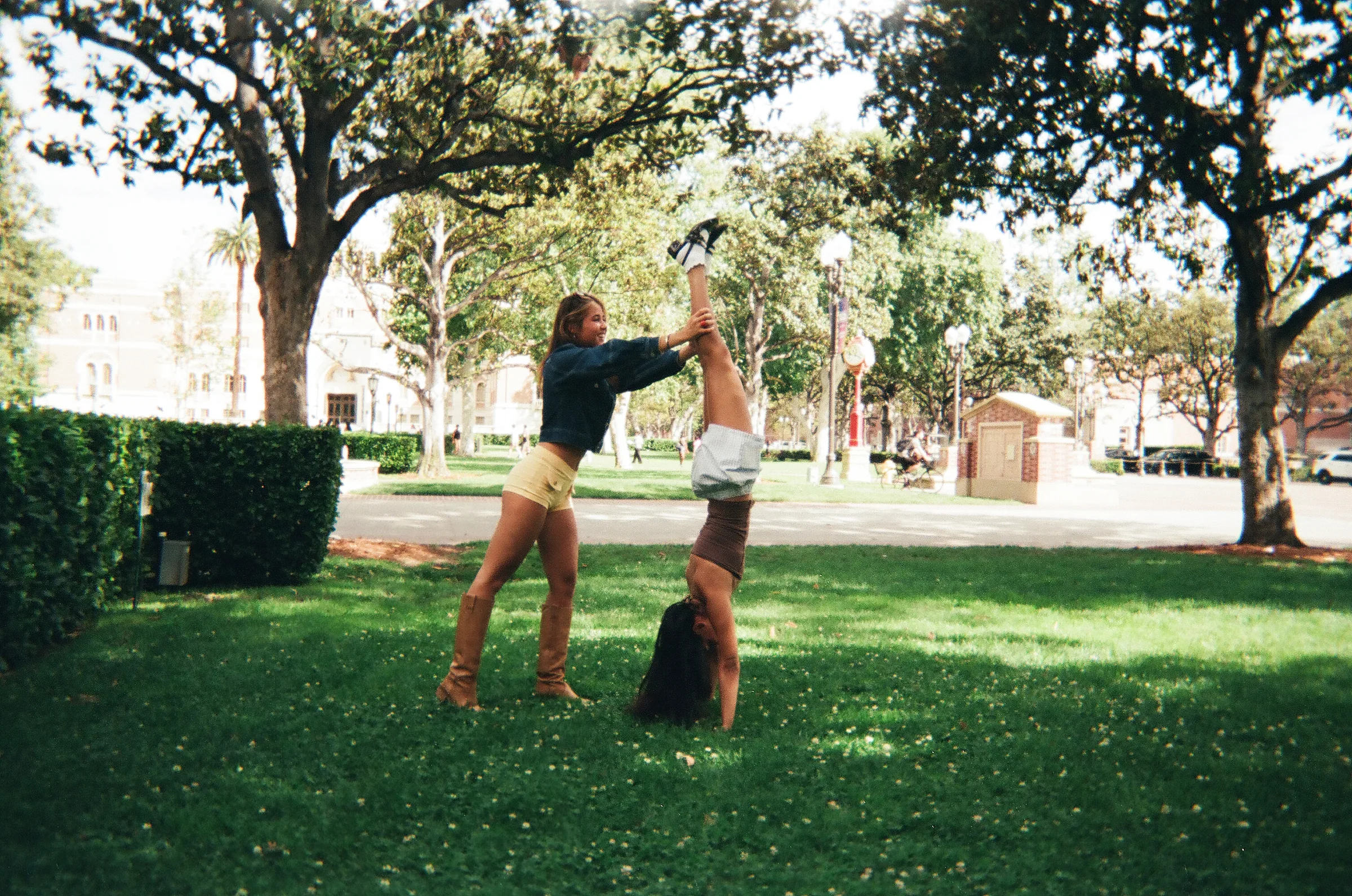

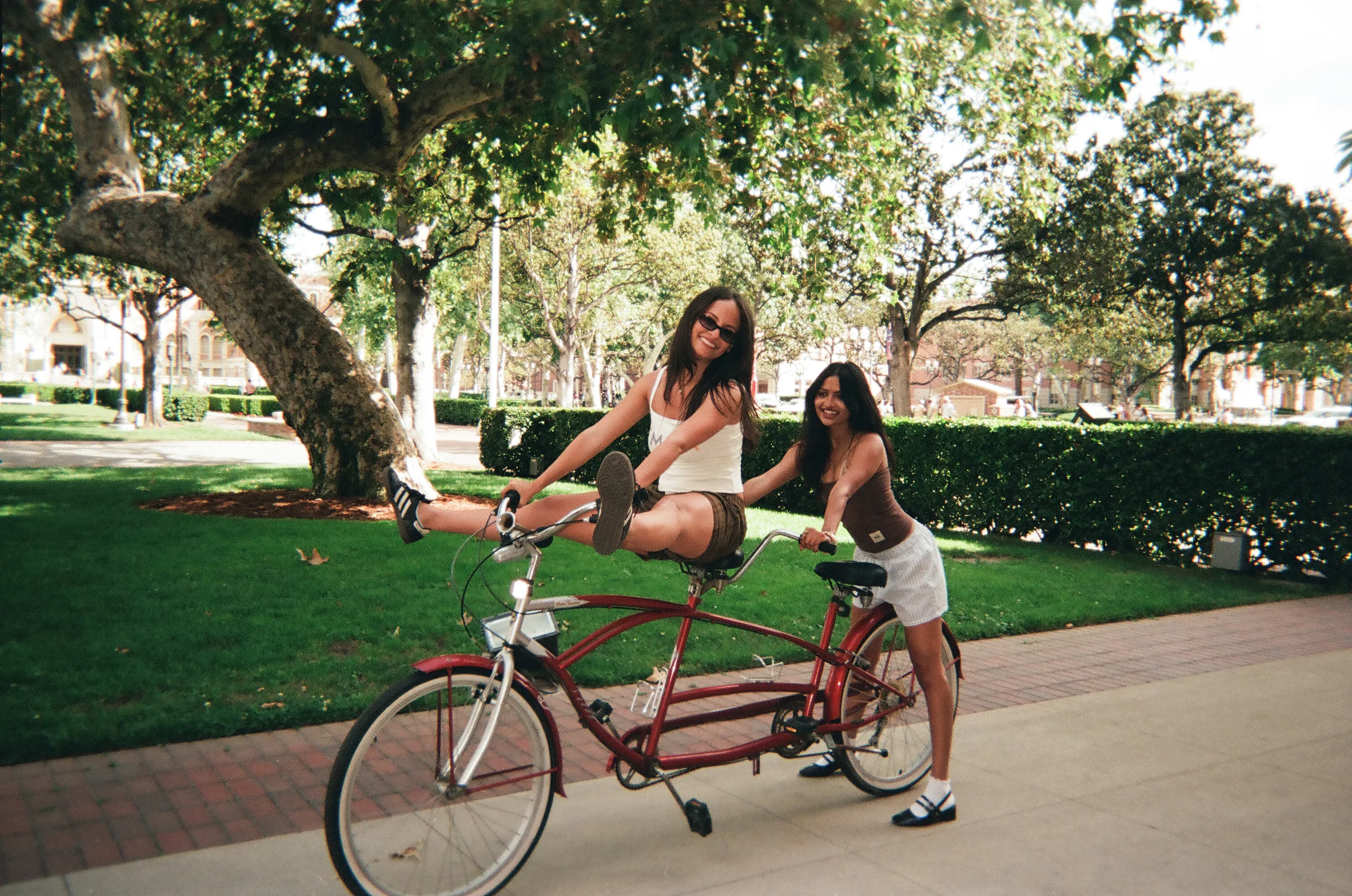
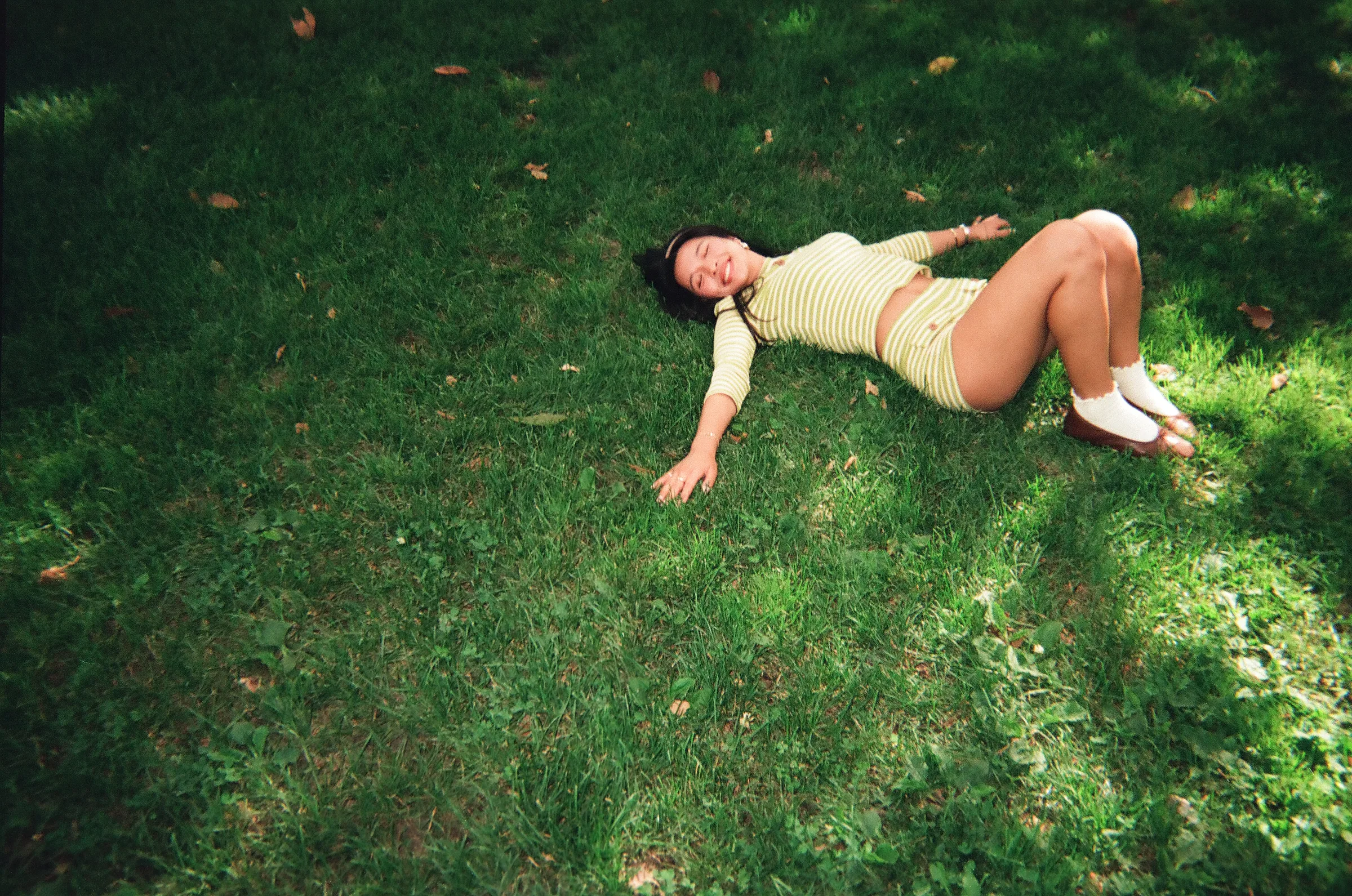
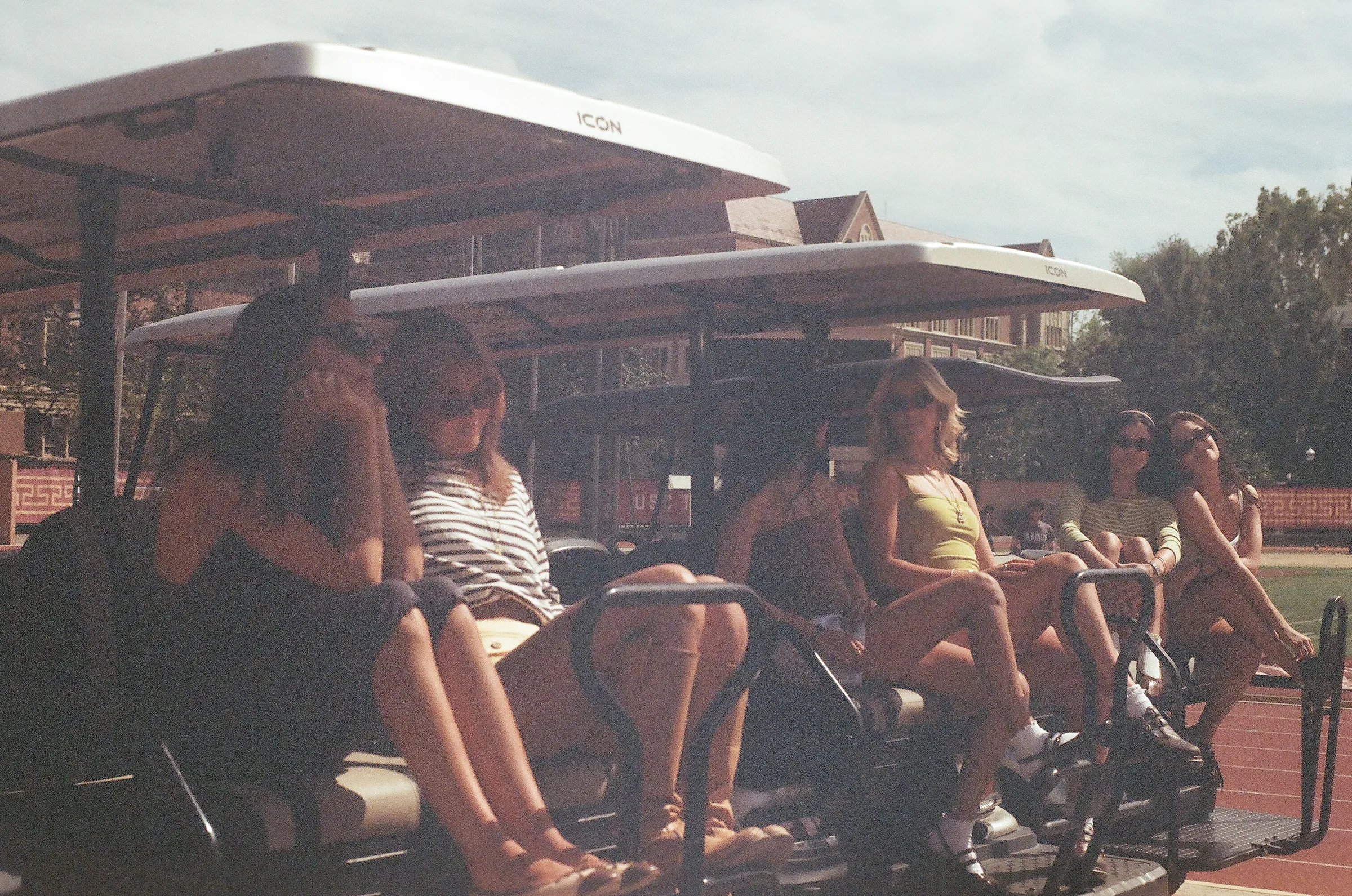
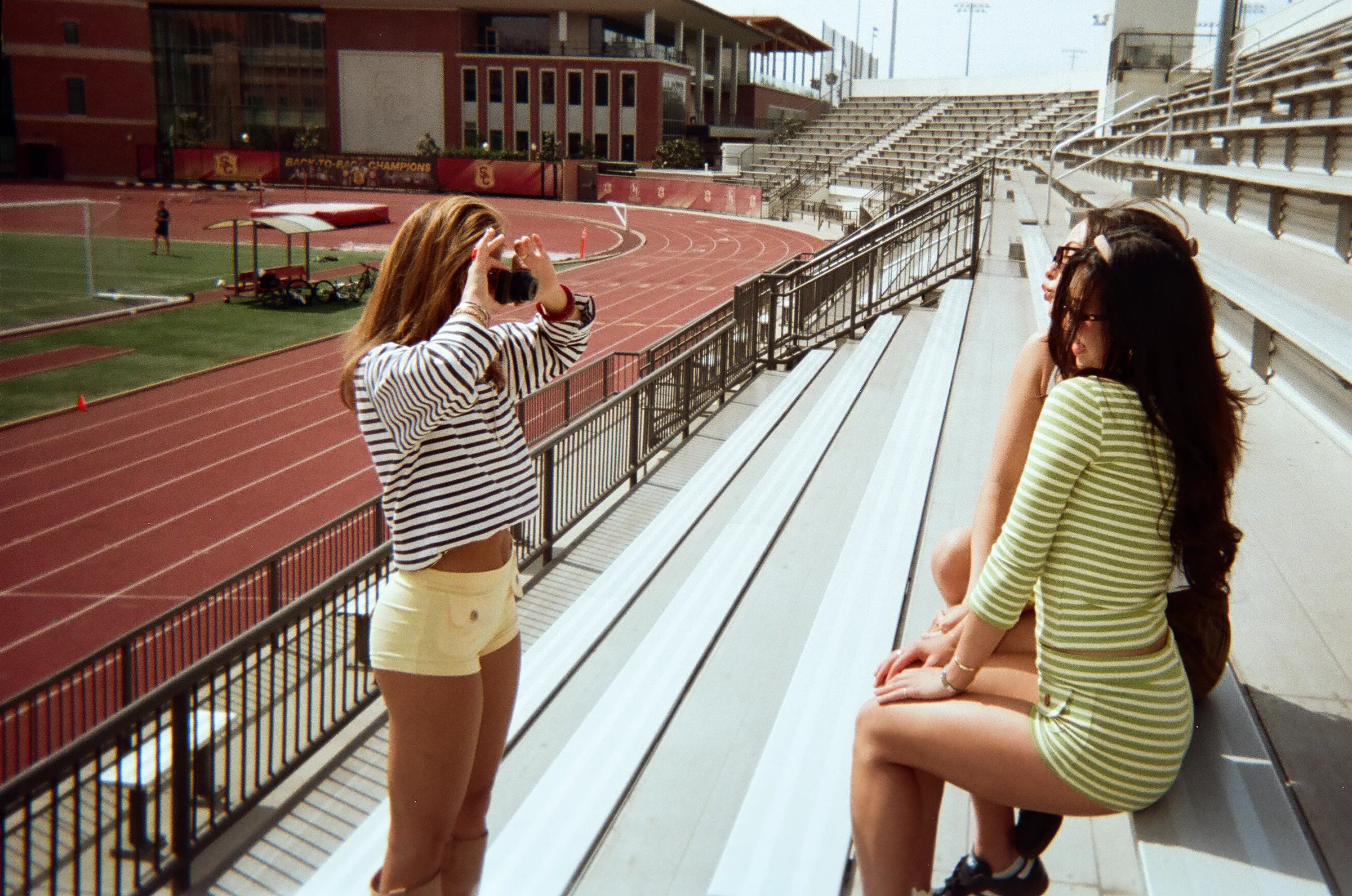
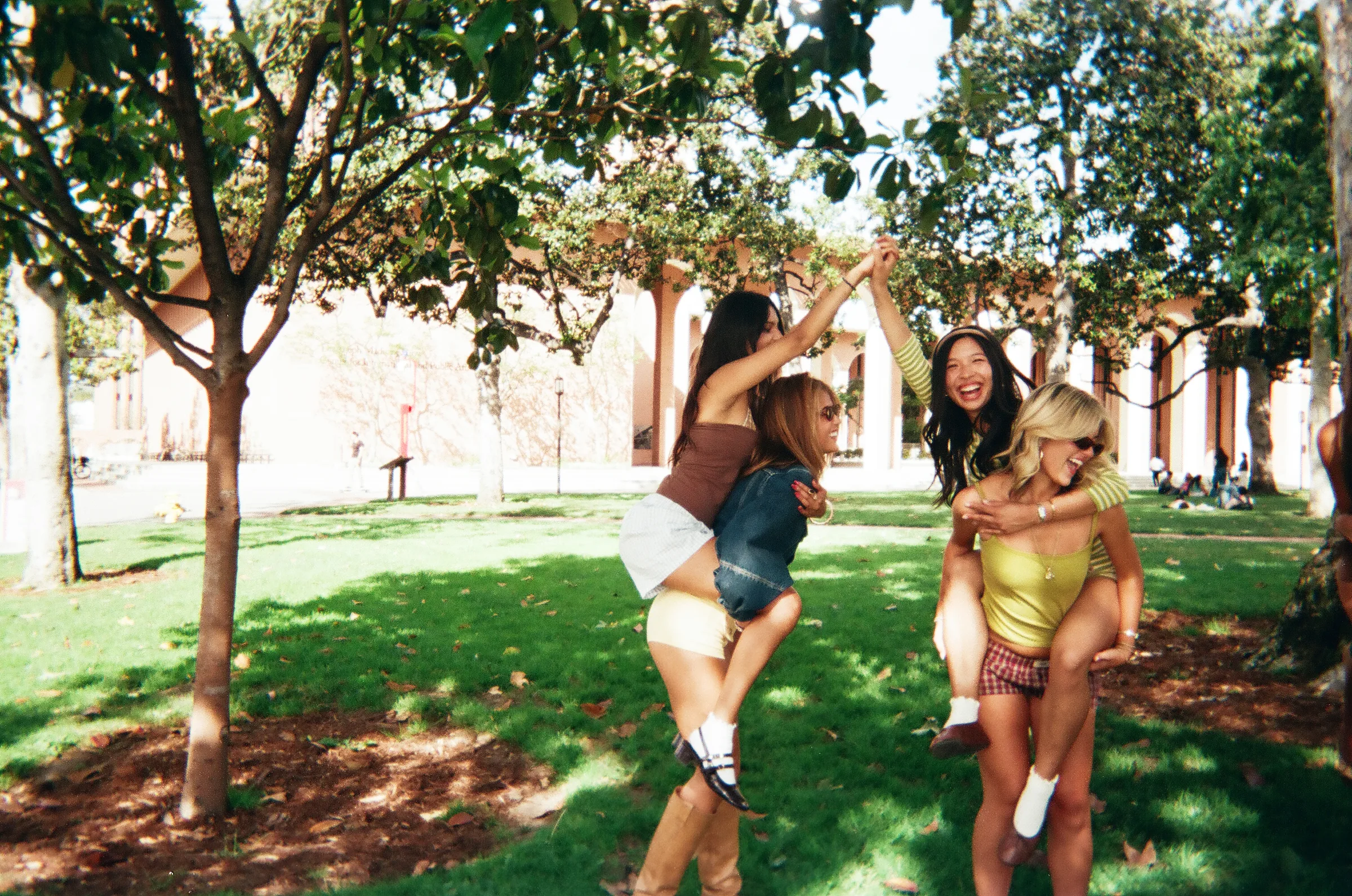
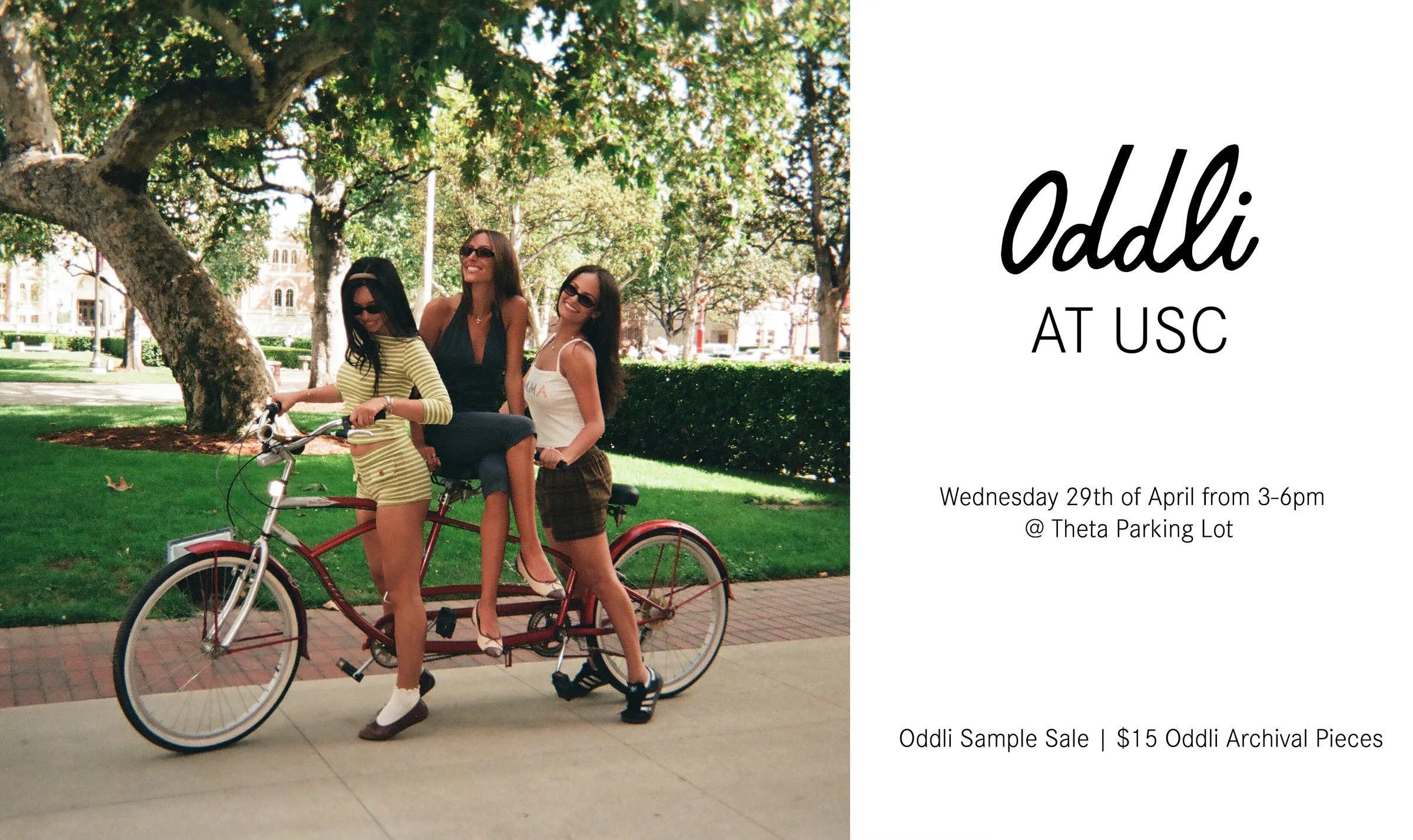
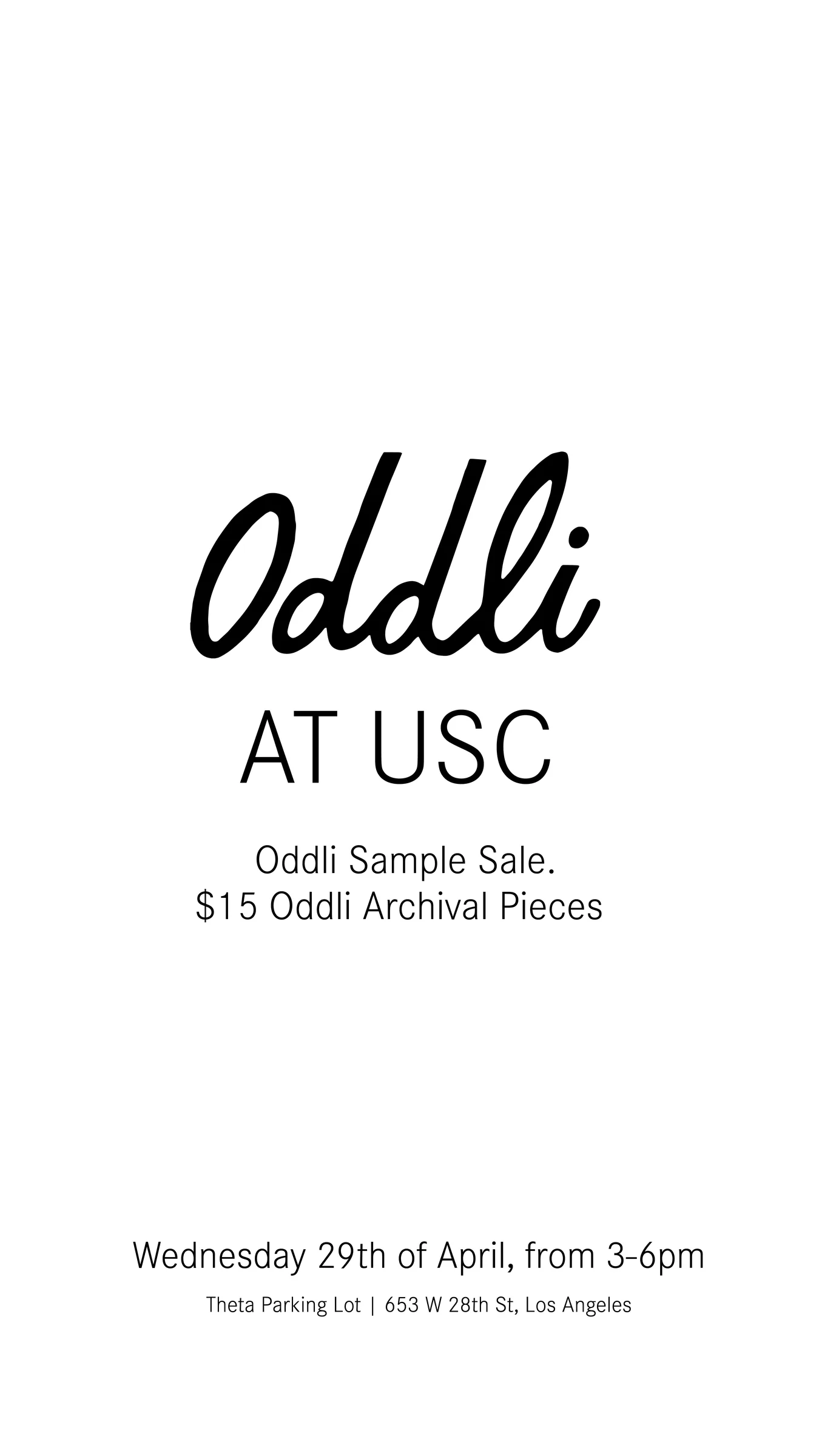
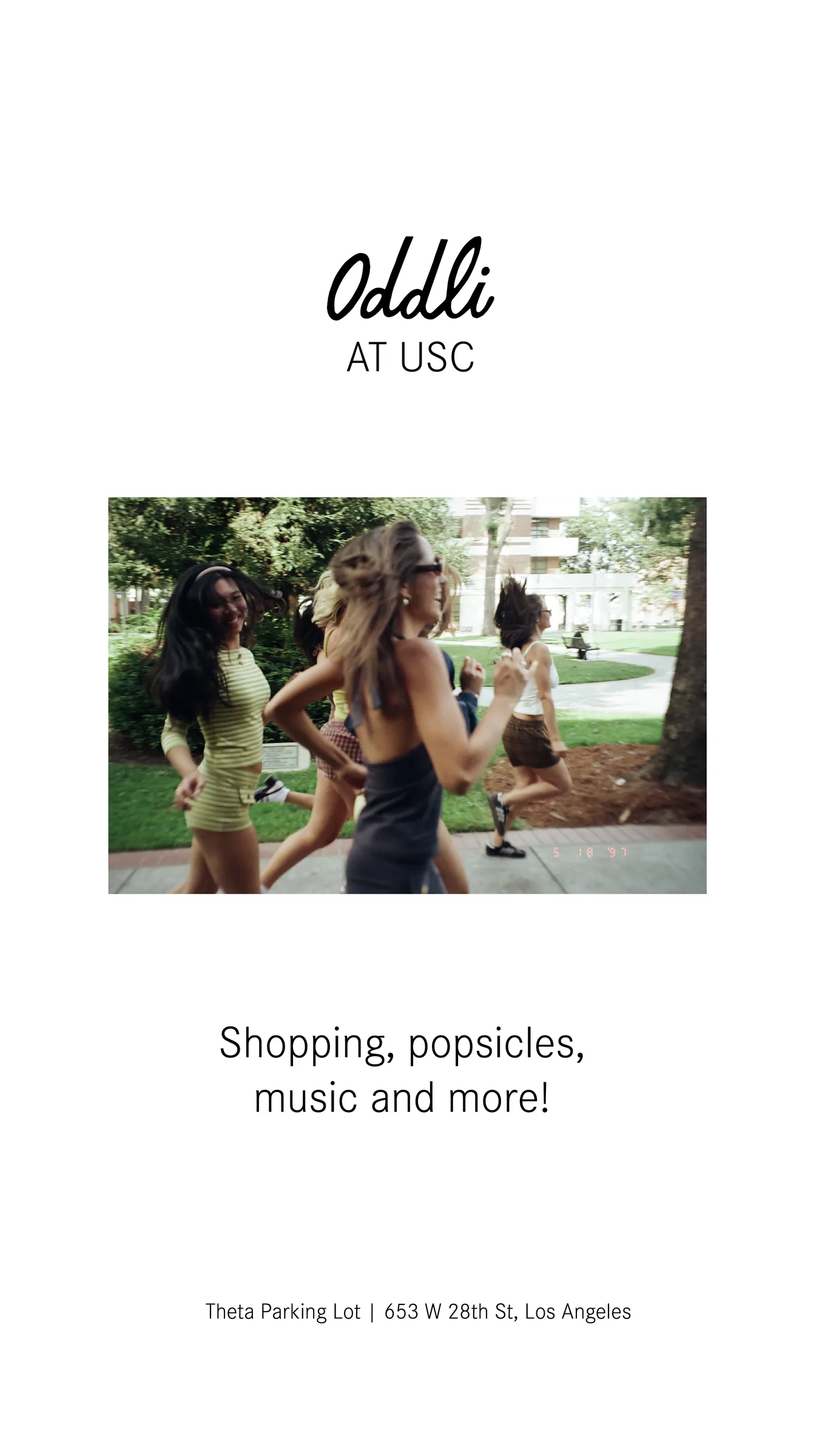
Promotional Assets
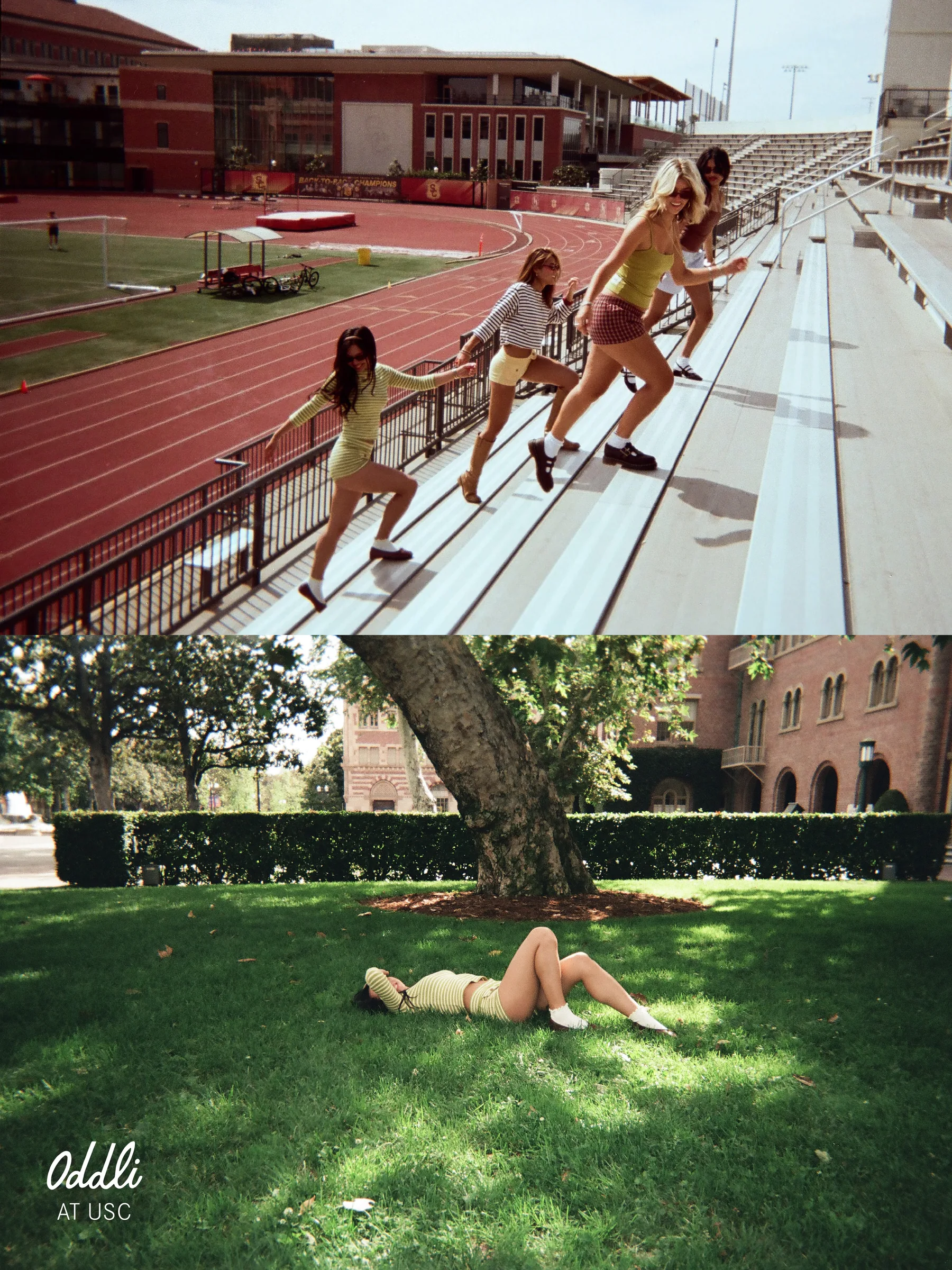
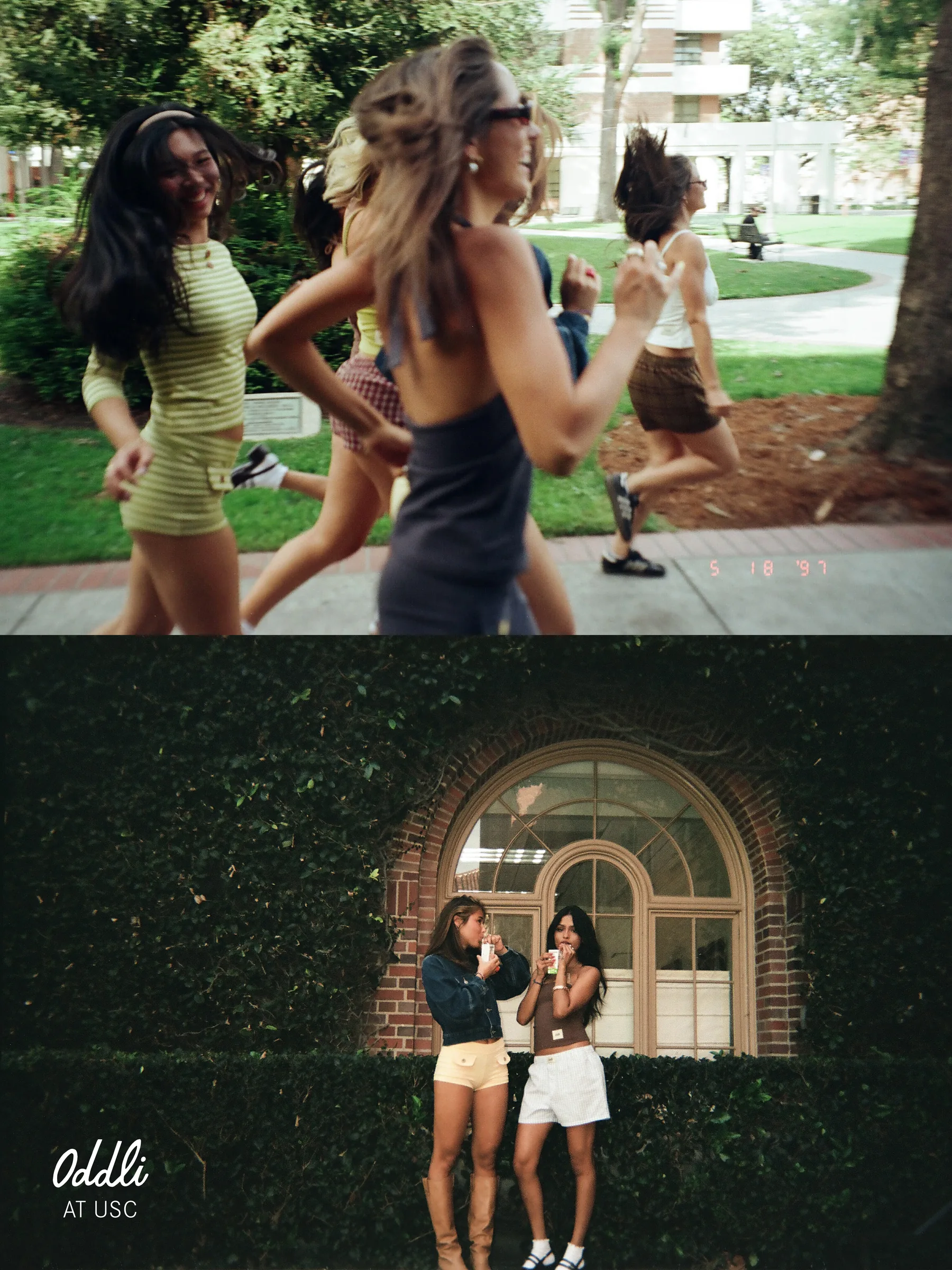
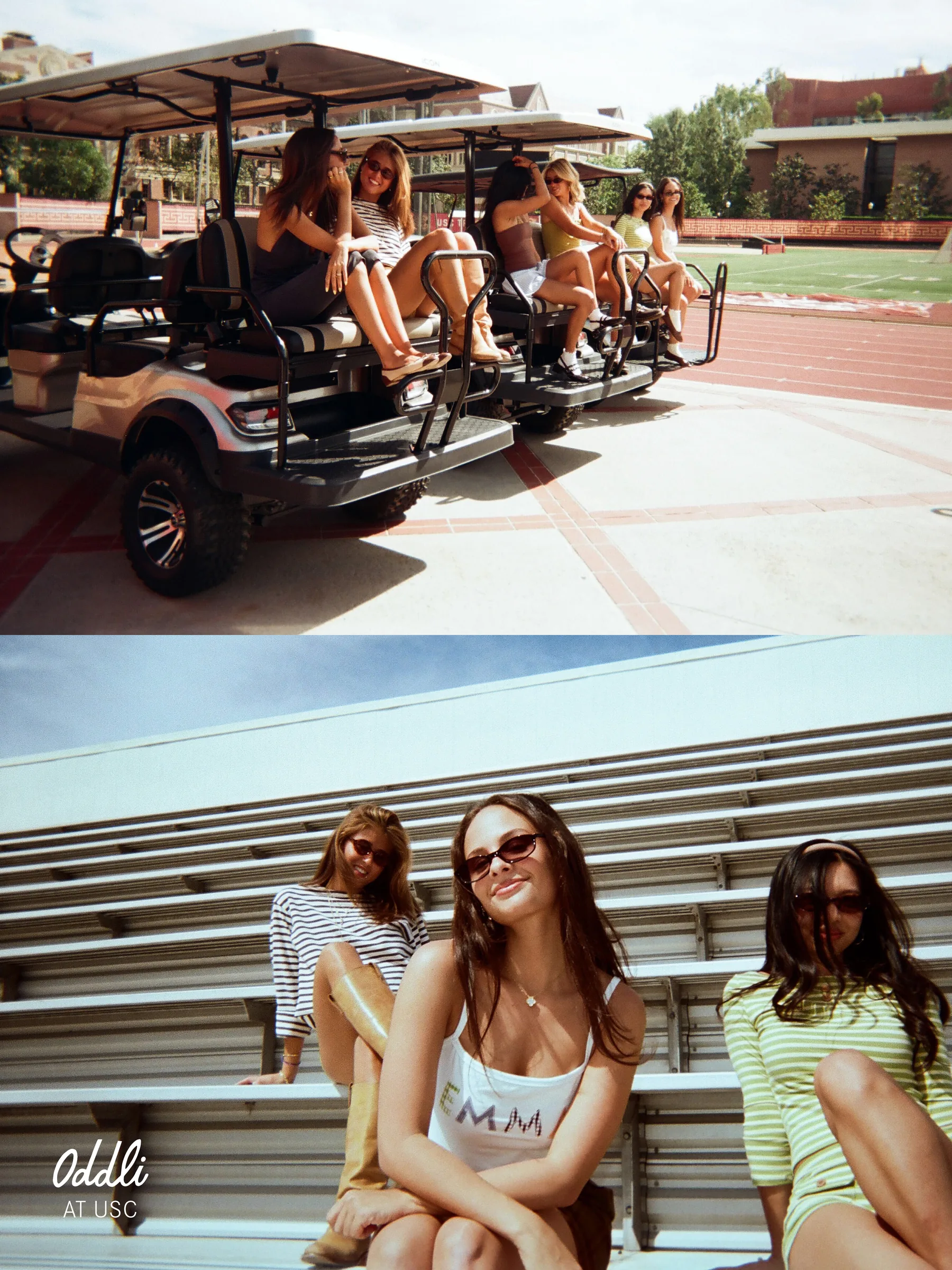
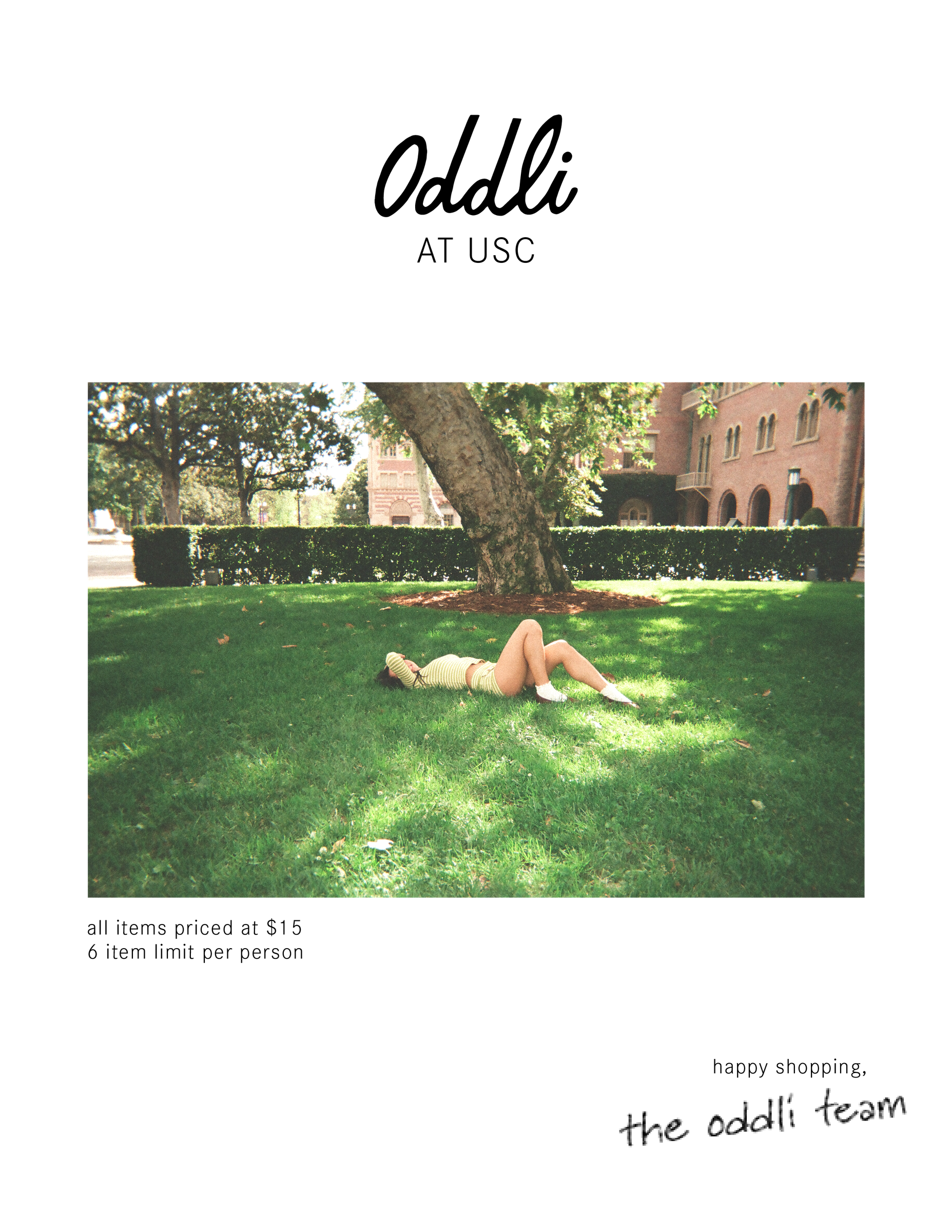
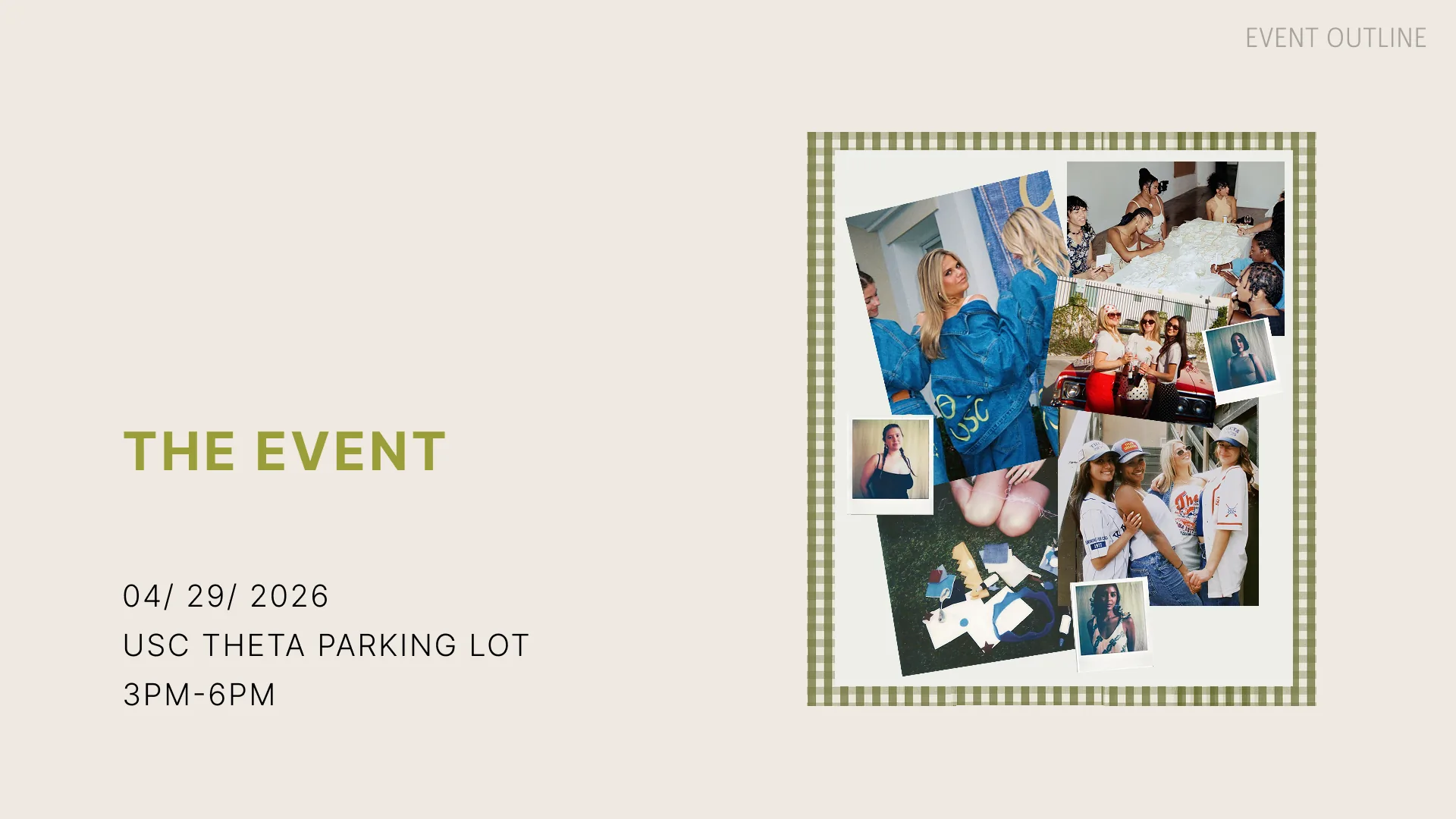
The Event
Outcome
USC Turnout
The event achieved 75% sell-through and drew 75% attendance from our target audience.
Reflection
Takeaways
Design school teaches you to defend your design decisions. This project taught me to rebuild one. The idea behind Oddli’s campus activation stayed stable, but nearly everything around it changed under real constraints: budget, timing, coordination, logistics, brand alignment. Pivoting after that first meeting was the moment I understood how “iterate, iterate, iterate,” the mantra drilled into me by professors, works outside a classroom. It’s what makes an idea survivable outside a deck.
I also learned to learn on the job. Photography and graphic design were familiar; experiential and spatial design were not. And the work often sat outside where a typical design role ends— negotiating a florist’s quote, writing an invoice, liaising between organizations that had never worked together before. All of it determined whether the design got built as intended. Owning a project end-to-end meant realizing that design is only as strong as the coordination holding it up.
Teamwork proved that point daily. Lola and I had strengths in different areas, which meant most problems got flagged and avoided before they became real issues. I came out of this project enjoying it as much as I did because of how much I still had to learn— a reminder that the work worth doing is oftentimes not the work you already know how to do.
References available upon request